
Construcciones Yamaro: Transmutation joint venture closes the loop on low-carbon concrete
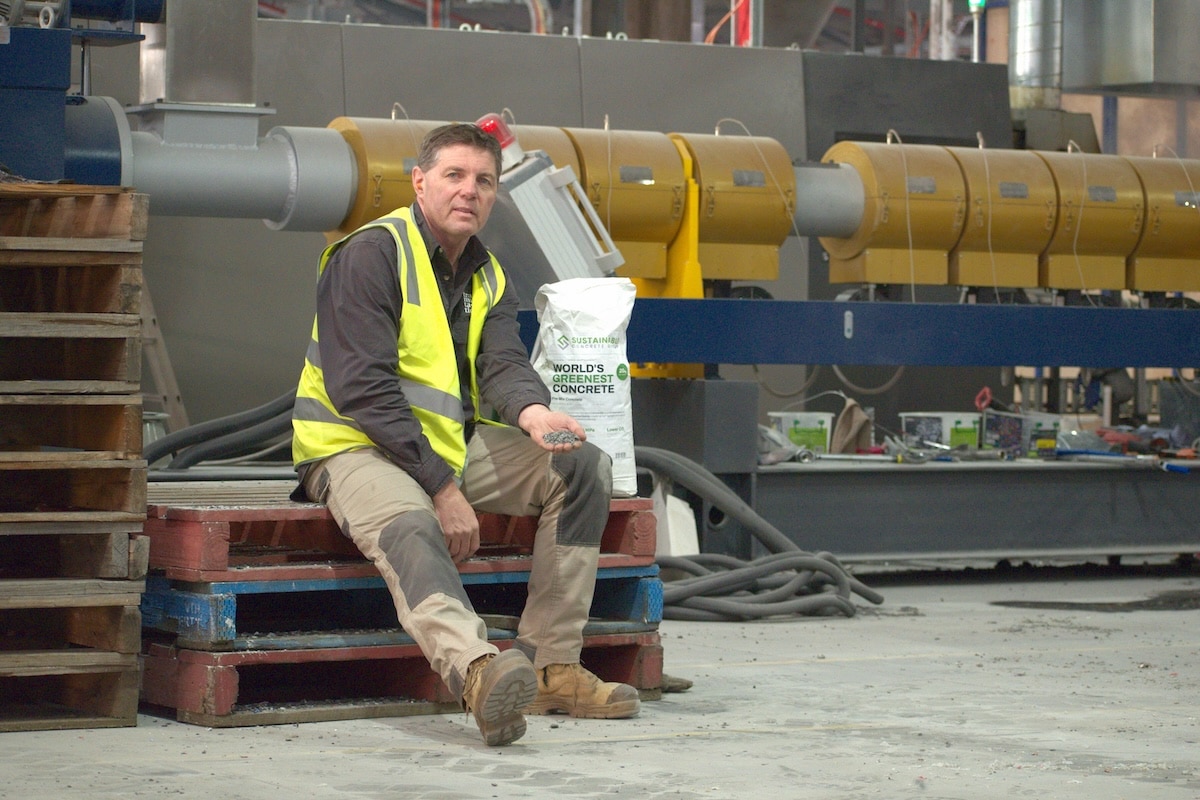
Transmutation has entered a new joint venture to bring “infinitely recyclable” low-carbon concrete to the national market.
Concrete is one of the construction industry’s largest decarbonisation challenges. Specified at enormous scale, its production ranks among the world’s largest industrial sources of carbon pollution.
For Transmutation founder Brad Scott, concrete decarbonisation was the logical extension of a business already built around sustainable supply chains. The company sources hard-to-recycle material from Australian waste streams, processes it domestically and converts it into carbon-traceable materials engineered to construction industry specifications. After bringing SIMPac-awarded PostPrime products, made from second-use materials once considered unrecyclable, to the construction market, Scott saw concrete as a larger test of the same approach: a high-volume material in which lower-carbon inputs, verified data and circular supply chains could deliver both commercial and environmental advantage.
From pilot to production
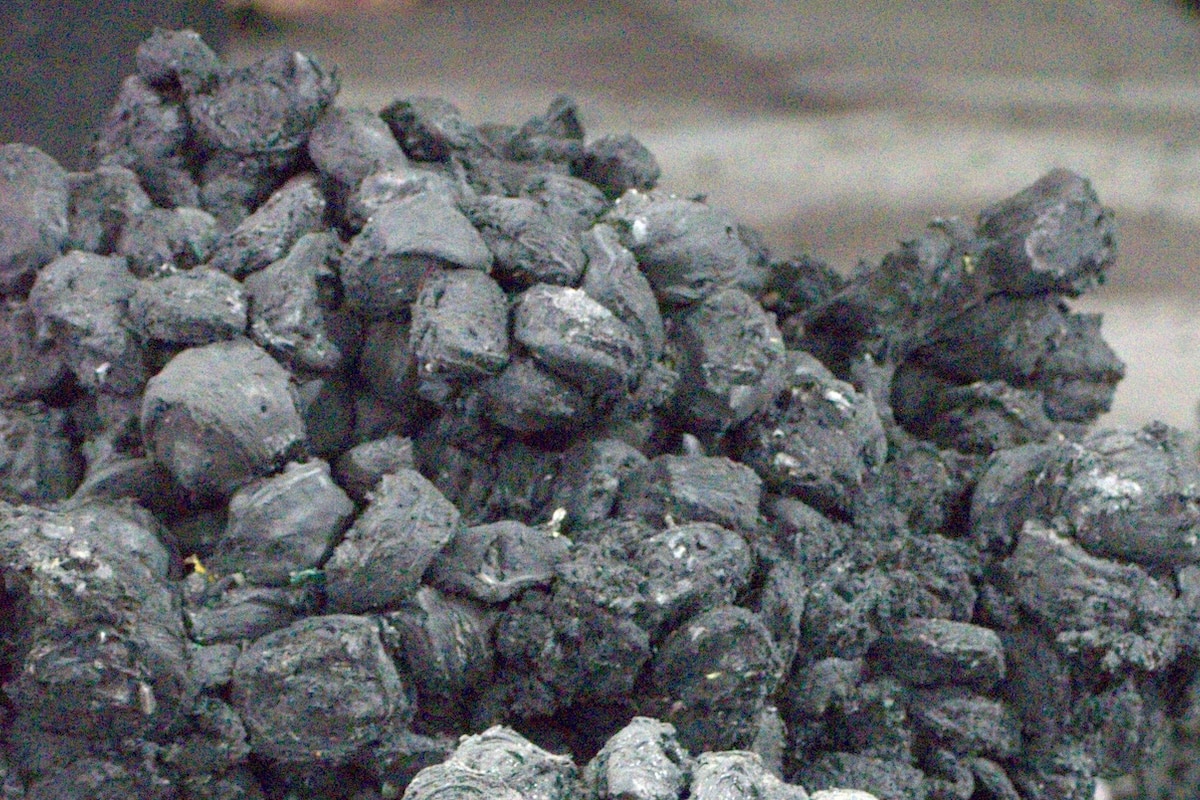
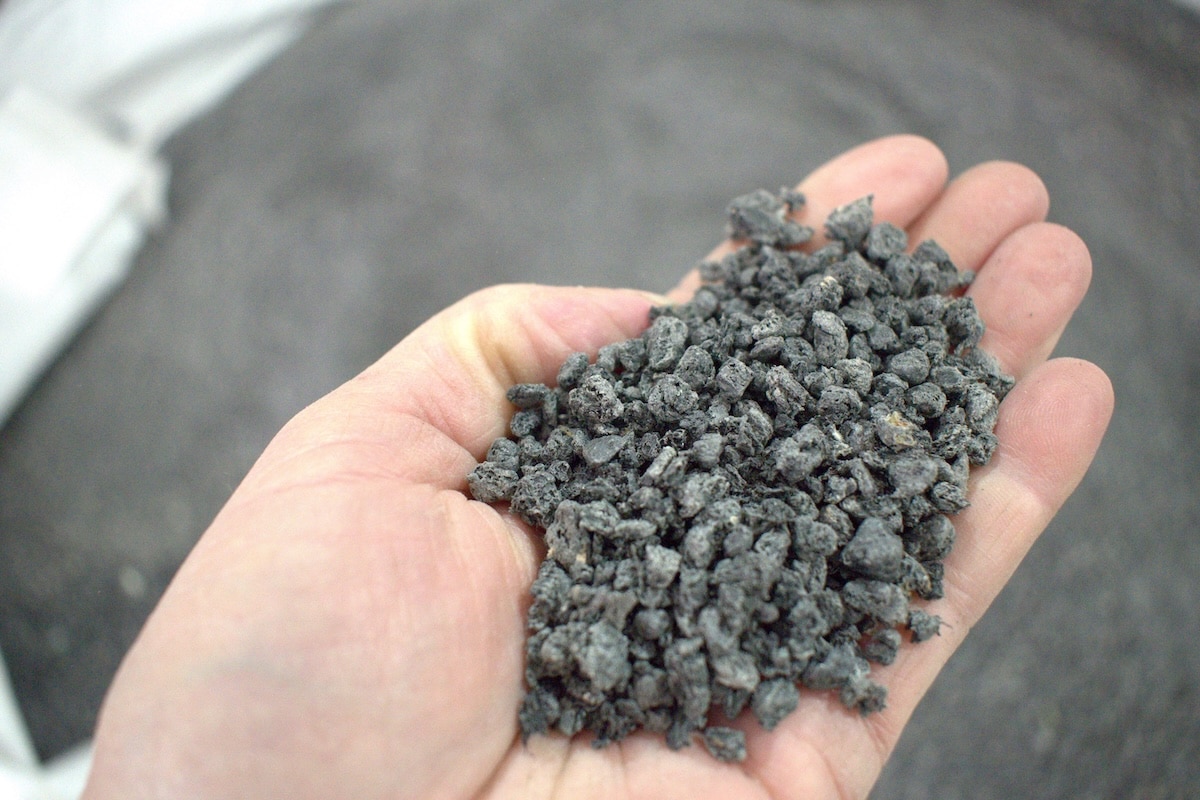
In late June, Transmutation announced a joint venture with Sustainable Concrete Group to form SCG Transmutation. The joint venture has acquired the former $2.5 million CRDC facility in Tottenham, Melbourne, converting the pilot plant into an operational factory for Resin8, an eco-aggregate manufactured by transforming mixed plastic and e-waste into a mineral-polymer that no longer behaves like plastic. Designed for use in concrete and asphalt, it addresses both material demand and environmental impact.
“We are the only company in Australia converting hard-to-recycle plastic into synthetic aggregate that doesn’t leach and doesn’t create pathways to microplastics. Resin8 is one of a kind,” says Scott.
According to Scott, independent lifecycle assessment confirms Resin8 has a low embodied carbon profile while incorporating about 80 per cent post-consumer recycled plastic. Resin8 isn’t a one-use recycled input; its strength is that it can stay in the construction material cycle.
“A lot of products can find a use for waste, but this goes further,” says Scott. “Resin8 is already a clean synthetic aggregate, so when that concrete or asphalt reaches the end of its life, it can be crushed and reused again. We’re taking plastics that are difficult to recycle and locking them into infrastructure in a way that keeps them in the circular economy. That’s the big difference – Resin8 is infinitely recyclable.”
The CRDC acquisition gives the venture the infrastructure to move Resin8 into commercial supply. It also gives SCG Transmutation a local base for processing difficult waste streams, managing product quality and feeding a core ingredient into concrete and asphalt. Resin8 can now be produced close to the market it’s designed to serve, with the testing, supply and scale needed for commercial concrete applications.
Related stories:
- Transmutation sets the terms for decarbonisation
- Park Agility strengthens parking infrastructure with Transmutation
- Recycling pioneer pushes plastic further with limestone solution
Changing the mix
Resin8 is Transmutation’s first step in concrete decarbonisation, but not the whole proposition. The eco-aggregate is used inside a wider concrete ecosystem that targets the mix, the supply chain and the way the finished material performs. The venture is producing what it believes is Australia’s lowest-carbon concrete, and potentially one of the lowest-carbon concretes in the world.
“The difference is where most low-carbon concrete products finish, SCG starts,” says Scott.
Much of the lower-carbon concrete market starts by reducing cement content, often through supplementary materials such as slag or fly ash. That can lower embodied carbon, but it still leaves other parts of the mix open to improvement.
SCG Transmutation’s approach begins with lower-carbon cement, then adds proprietary technologies across the rest of the concrete system. Recycled sand made from processed solar panels and waste glass replaces the traditional sand component. Zymix, a water additive technology, helps the mix use less water while maintaining strength. Resin8 replaces part of the natural aggregate, while a structural technology reduces carbon through the way pavement is constructed.
“It’s not one change,” says Scott. “We are starting with lower-carbon concrete, then reducing carbon further through a suite of technologies working together.”
His point isn’t that one material has been swapped for another. It’s that each part of the mix is being examined for its carbon, resource and performance impact. Cement carries the largest carbon load, but concrete is also made from water, sand and aggregate. Sand accounts for about a quarter of a standard concrete mix, giving the recycled solar panel and glass component a role in reducing demand for virgin material as well as diverting end-of-life materials from waste streams.
Zymix adds another lever by helping reduce water use and lime requirements while maintaining, and in some cases increasing, strength. Resin8 dramatically reduces the weight of the aggregate component while helping difficult plastics and e-waste plastic move into a repeatable material cycle.
“We meet whatever the current technology can do on the cement side, but we don’t stop there,” says Scott. “Others are mainly focused on cement. We’re looking at all four parts of the concrete mix.”
Where the data counts
A lower-carbon mix must still behave like concrete: meet specification, be available through the right supply channels, and come with evidence that can stand up in tenders, project reporting and client review. That’s particularly important across major public and private infrastructure programs, where suppliers are being asked to show emissions tracking, sustainable sourcing, ESG performance, supplier integrity and local capability.
This is familiar territory for Transmutation. Its products aren’t sold on recycled content, but on their traceable material inputs, processing, design, performance, testing and data. That same approach is being applied to concrete. Resin8 already has an overseas environmental product declaration (EPD), with work underway towards an Australian EPD. Concrete laboratories are conducting MPa strength testing, and industry testing is occurring on products and mix designs.
“Independently verified data is absolutely critical in today’s procurement environment, especially in construction. This is a heavily engineered sector, and people are making decisions about buildings, bridges and infrastructure that have to perform,” says Scott.
“That’s why independent verification and accreditation are so important. A lot of time, money and effort go into getting products tested, documented and accredited, but that work gives procurement teams the information they need. It means the claim isn’t just marketing; it’s backed by data.”
The commercial advantage isn’t limited to carbon accounting. Scott says SCG Transmutation works with Societal Outcome Solutions, which helps contractors embed social, environmental and sustainable commitments – such as Indigenous enterprise engagement and local job creation – into tender responses.
“When those outcomes are supported by lower-carbon materials, EPDs and accredited documentation, contractors have a stronger story to put forward,” says Scott.
“We’re not just bringing one product to market and saying, ‘Put this in and it will make the project better’. We’re bringing a group of technologies together, supported by data and accreditation, so contractors can show a lower-carbon solution across the concrete mix.”
From testing to adoption
The next challenge is adoption. Concrete using Resin8 has performed in trials with major concrete companies, and Scott says the product has shown it can meet strength and performance expectations. But concrete procurement is conservative, and successful testing doesn’t automatically change what gets specified.
That caution is part of the construction sector’s sustainability challenge. Engineers, specifiers and procurement teams are working with materials that have to perform across long-life assets, often under strict standards and liability frameworks. Lower-carbon products only become commercially useful when they can satisfy those requirements and be introduced without disrupting the way projects are delivered.
“That’s one of the barriers to innovation in concrete,” says Scott. “A company can trial a product, confirm that it works, and still not push it into the market. The performance side is there, but the procurement model has to move as well.”
SCG Transmutation is working with boutique independent concrete suppliers to make its lower-carbon mix designs available through existing customer networks. For smaller firms, a concrete product supported by multiple lower-carbon technologies, testing and documentation creates a point of difference in a market where sustainability requirements are becoming more important to clients.
Cost also works in its favour. Scott says the product is competitive with conventional concrete and, in many cases, is expected to be the same price or cheaper once the suite of technologies is brought together. Adoption also doesn’t depend on contractors investing in new infrastructure, retrofitting plants or changing their processes before they can use the lower-carbon concrete.
“We’ve done the science, developed the mix and gathered the data contractors need,” says Scott. “If a contractor wants a highly sustainable concrete mix that meets the required specifications, we can provide that within the systems they already use.”
The lighter weight of Resin8 adds another project-level advantage. If concrete elements can achieve the required strength at a lower weight, there can be flow-on effects for reinforcing, steel requirements, handling, transport costs and transport emissions. On large-scale projects, the savings can add up across design, materials, transport and delivery.
“It’s commercially viable and delivers a better product – lower carbon, circular, backed by data and still meets performance requirements,” says Scott.
A circular supply chain
The supply-chain case is as important as the mix design. Demand for lower-carbon materials is rising, while traditional supply chains are exposed to resource location, transport distance and the availability of supplementary cementitious materials. A quarry has to operate where the resource exists. As sources closer to major projects are exhausted, materials often travel further, adding cost and emissions.
A synthetic aggregate plant changes that geography. Resin8 can be produced close to construction activity, using waste streams already being generated nearby. The former CRDC facility gives SCG Transmutation a local production asset, but it also supports a broader form of sovereign capability: greater oversight of inputs, processing, testing and supply.
Transmutation’s role goes even further.
“The ecosystem we’re building isn’t just around the product technology or the four different technologies going into the concrete mix. It’s also the supply chain around them,” says Scott. “It starts with raw materials and waste streams being processed, made into a highly accredited product and brought into the market. If we can control and influence those areas, we get more transparency over where the materials are coming from, how they’re made and how they perform.”
The supply chain also has to account for what happens at the end of a material’s first life. Recycled content alone doesn’t make a product circular if it leaves the system after one use. Resin8 is designed to keep moving from difficult waste streams, to synthetic aggregate, to concrete or asphalt, then back into aggregate when that material is crushed and reused.
“A circular product isn’t just something with recycled content in it. It has to be designed so it can be recycled again and go back into the system many times over,” says Scott. “With Resin8, we are looking at the whole pathway, making sure that material can continue to be recycled into the future.”
For Scott, Resin8 also reflects the company’s broader ambition. Transmutation’s four pillars – community, craftsmanship, innovation and sustainability – aren’t separate from its commercial focus. They inform the kinds of products the business wants to bring into the construction sector.
“We don’t want to bring out something that’s only a small improvement on what already exists. We want to bring solutions that change what’s possible,” says Scott. “That’s what Resin8 does. It’s a first for Australia, and it gives the construction industry a product that’s more circular, more sustainable and commercially viable. That’s where we want Transmutation to be – at the tip of the spear in sustainable solutions.”
The next stage is to keep taking carbon out of the wider system. SCG Transmutation is looking to bring more testing capability in-house, while also exploring opportunities to electrify transport and support plants with solar, batteries and green energy where possible.
“Concrete decarbonisation isn’t only about changing the mix,” says Scott. “It’s about taking carbon out of sourcing, processing, transport, measurement and reuse.”
Through SCG Transmutation, the supply-chain model behind Transmutation’s earlier products has moved into concrete at scale.
The post Transmutation joint venture closes the loop on low-carbon concrete appeared first on Inside Construction.
View Source


Comments
Post a Comment