
Construcciones Yamaro: Commissioning: The missing link in construction’s QA data trail
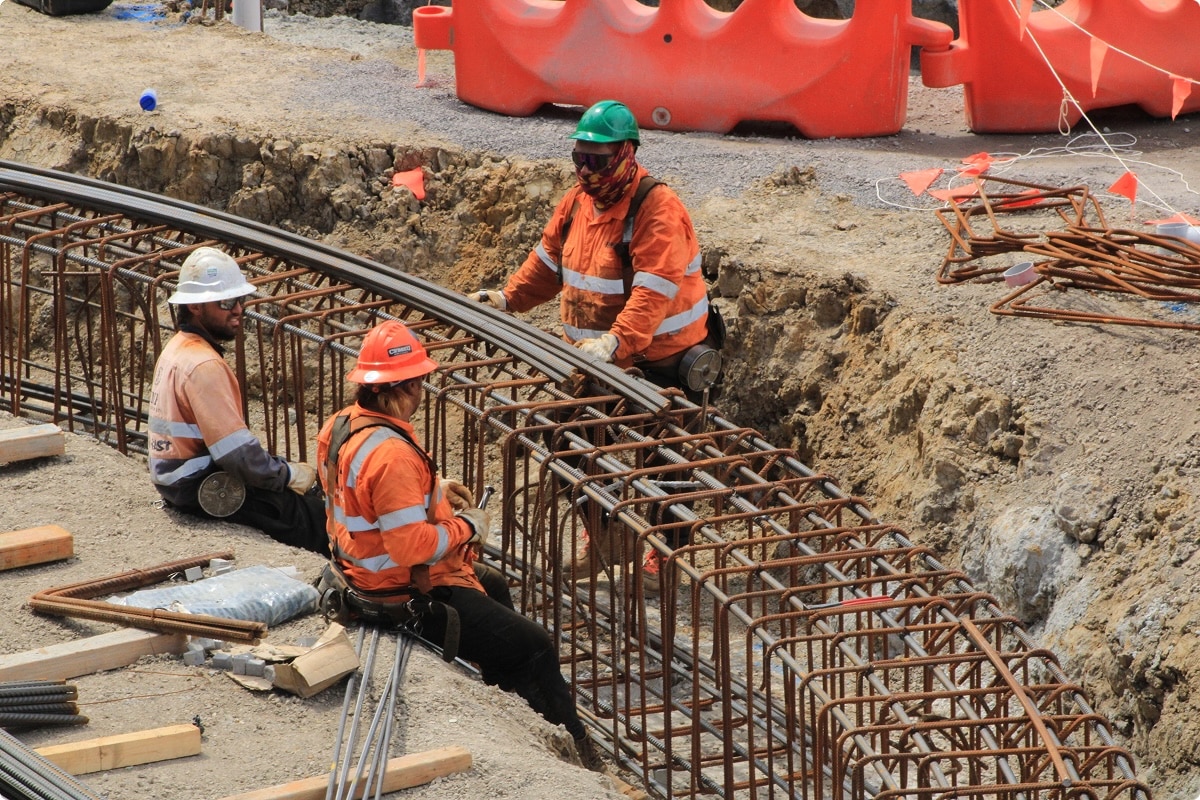
Commissioning is one of the last breaks in the construction data trail. Visibuild is building the connection.
Every major construction project generates an enormous amount of documentation. Inspection records, test results, ITP sign-offs and non-conformance reports form the evidence trail of a well-delivered project. For most of the build, that trail stays intact.
Then commissioning starts and the chain breaks. The records do exist, but they live in one system while commissioning happens in another. Teams spend the final weeks of delivery pulling records out of their construction platform, downloading files, reformatting them and uploading them into the commissioning provider’s environment. The same documentation is handled twice, with the risk of gaps surfacing too late to fix without cost.
“It becomes cumbersome because the same evidence is handled twice,” says Shaun Phelan, co-founder and CPO at Visibuild. “Gaps often surface at the end, as records are compiled for commissioning or handover, which can lead to rework. You end up with siloed data, duplicated effort and a broken chain of evidence across the project lifecycle.”
Commissioning tests whether installed assets perform to design intent. Generators, chillers, air handling units and switchboards aren’t minor components. They are expensive, technically complex and central to how a building operates for decades. Getting them right matters.
The process generally moves through five levels. The first three, covering factory acceptance testing, pre-installation checks and system start-up, are typically documented through quality assurance checklists during construction. It’s only when projects move into formal commissioning, levels four and five, that a separate platform enters the picture.
Related stories:
- How Visibuild is using AI to help builders see around corners
- Closing the loop on construction quality and defect management
- Visibuild connects quality across the construction lifecycle
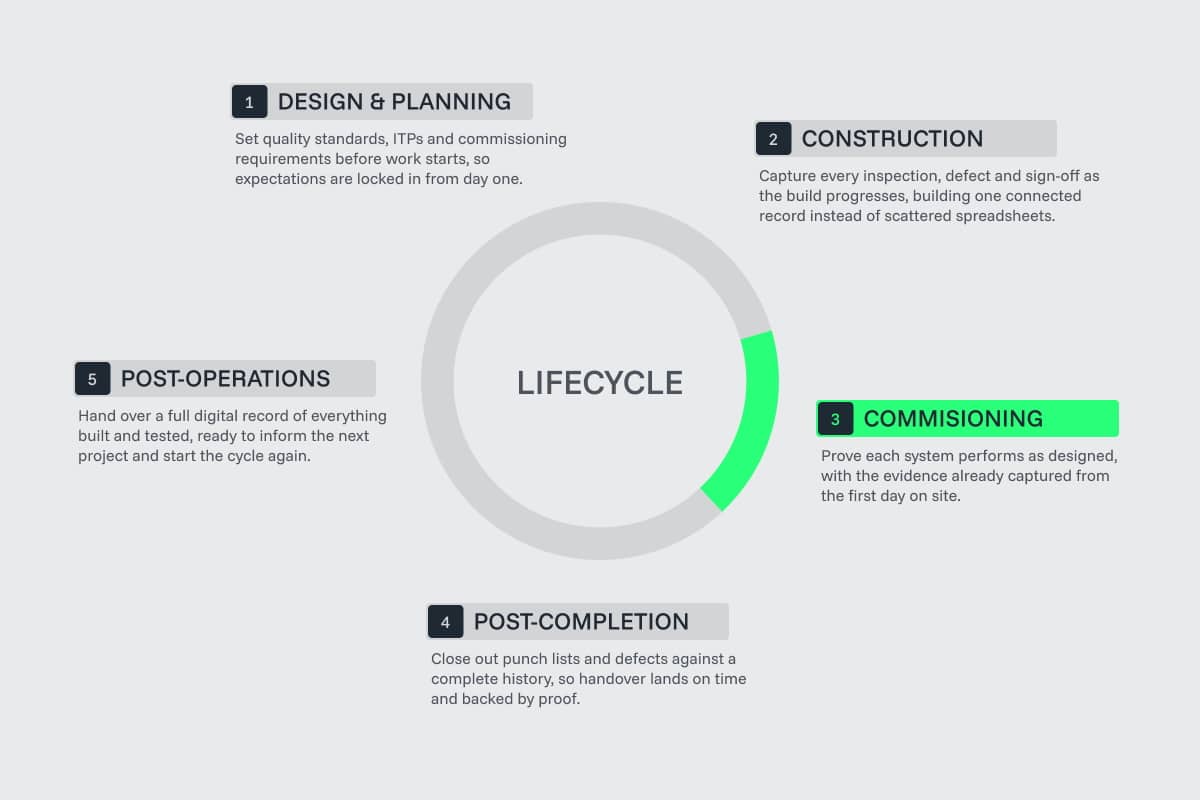
At that point, teams need to go back into their construction records, find the relevant checklists and transfer them across. On a large project with hundreds of assets and dozens of subcontractors, that’s a big task. Because it happens at the end, any gaps in the original records create rework when the project can least afford it.
The issue compounds once a building enters operation. Asset owners receive a handover package assembled from multiple contractors, consultants and platforms. It may appear complete, but when a chiller fails at year seven and the operator needs to understand what was installed, who checked it and when, the answer is often spread across disconnected systems or documentation that’s been lost.
“Asset owners don’t have full visibility over what went into the project,” says Phelan. “When they need to make decisions about whether to refurbish an asset or replace it entirely, they’re making those decisions with only half the data.”
The challenge shows up clearly in data centres, where the asset ecosystem is tightly interconnected. Power systems, cooling infrastructure, backup generation and monitoring platforms need to perform together under constant load from day one of operation. A gap in the commissioning record for a single system can create uncertainty that ripples across the facility.
Ryan Treweek, co-founder and CRO at Visibuild, says the scale and complexity of data centre delivery is pushing project teams to think about commissioning earlier in the process.
“You can’t commission a data centre and then go looking for the construction records,” says Treweek. “The information needs to be there, captured progressively, from the day installation starts.”

It’s a pressure that isn’t unique to data centres. In hospitals, the operator needs to understand the full record behind every piece of mechanical and electrical plant. In pharmaceutical facilities, the regulatory audit trail runs from design intent through to functional verification. In any project where the asset ecosystem is complex and long-lived, the cost of an incomplete commissioning record doesn’t end at handover. It follows the asset.
Visibuild is extending its platform to close the commissioning gap. The development centres on native asset tracking. Rather than recording quality checks by location or inspection visit alone, each physical asset installed on a project will carry its own record inside Visibuild. Its inspection history, test results and any defects or non-conformances will travel with it through construction, into commissioning, and across into operation.
“The gap at the moment is commissioning,” says Treweek. “Records are exported out of Visibuild and moved into a separate commissioning platform, then teams come back into Visibuild once the project enters post-completion and operations. That break is what we’re working to close.”
With commissioning captured inside the same environment as construction and handover, the data trail from factory testing through to functional performance stays in one system.
Phelan describes this as the connected record: a single view of what was planned, what was installed, what was checked, what happened during commissioning, and whether any issues emerged during the defect liability period.
“That becomes genuinely valuable once the building is operating,” he says. “If it’s a hospital, the owner should be able to look back and understand the full record behind every asset in that facility, from the day installation started.”
The practical value starts at handover. Maintenance teams receive documentation they can use, rather than a package they need to spend weeks interpreting and reorganising. Schedules are tied to assets with known histories. Operators can see what was installed, when it was checked, and what condition it was in when the building was handed over.
Damien Quinn, co-founder and CEO at Visibuild, says, “A complete record helps owners and operators stay ahead of maintenance, rather than waiting for problems to appear. It helps keep assets in the best condition possible and gives them the strongest chance of reaching their intended design life.”
Over time, the record also gets smarter. When defects, non-conformances and commissioning failures are captured against specific assets across multiple projects, patterns begin to emerge. These might include a generator installed too close to a switchboard or a particular chiller model with a recurring failure mode. That intelligence can feed back into pre-construction templates, so future projects begin with the lessons of previous ones already built in.
“Each project informs the next,” says Quinn. “That hasn’t really been possible before because the data collection technology wasn’t there to support it. We’re at the point now where it is.”
The post Commissioning: The missing link in construction’s QA data trail appeared first on Inside Construction.
View Source


Comments
Post a Comment