
Construcciones Yamaro: How McConnell Dowell’s Tanuj Juneja leads complex projects
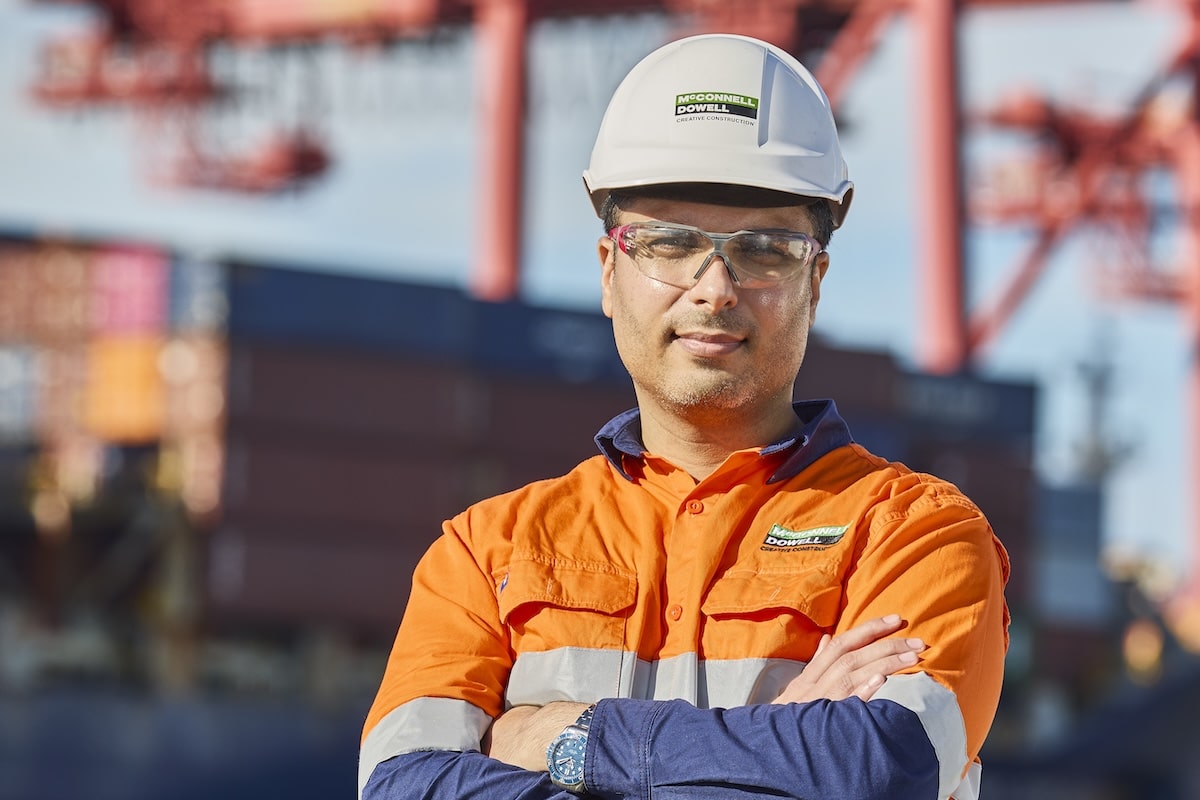
At McConnell Dowell, Tanuj Juneja brings composure, commitment and conviction to the pressures of complex infrastructure.
There are moments on a project when the answer is obvious to project director Tanuj Juneja. He can see the problem, the solution and the pressure building around the team. But after two decades in construction, he also knows leadership isn’t always about being the first person to step in.
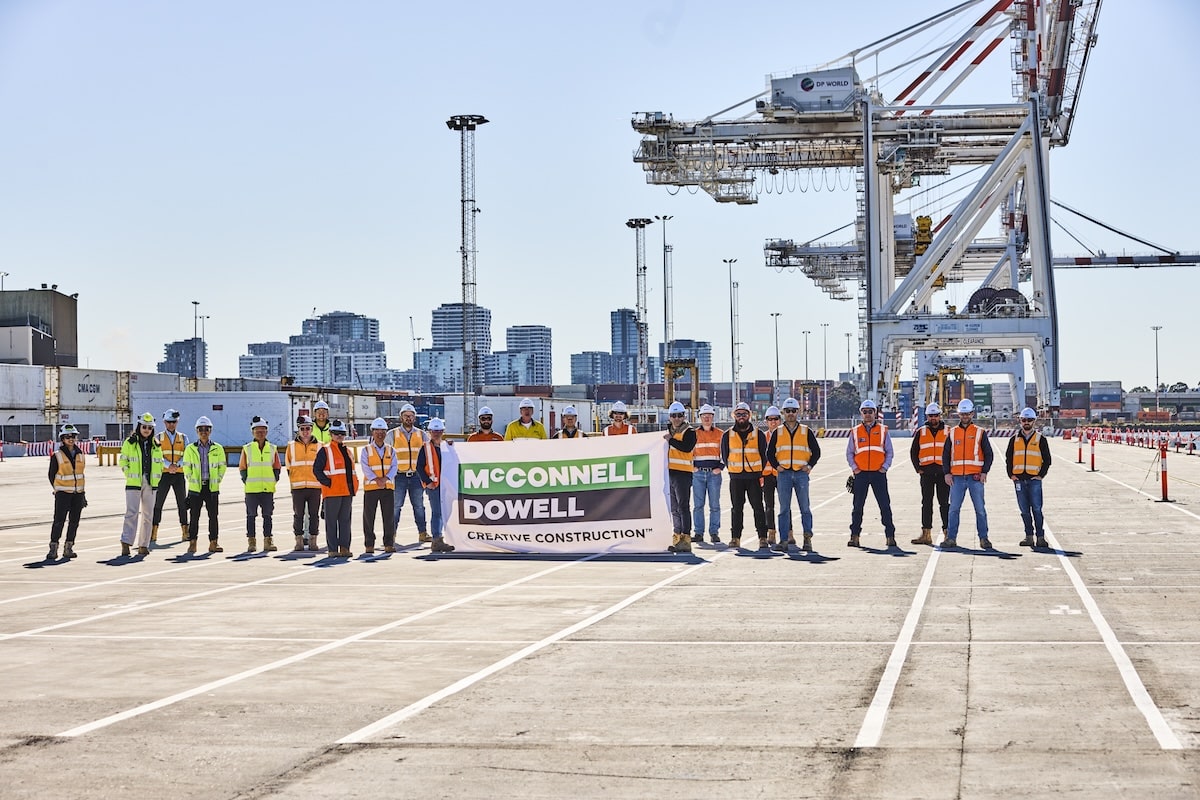
At Swanson Dock West, where McConnell Dowell is delivering remediation works, that restraint is tested daily. The project is technically demanding, staged around an operating container terminal and complicated by marine conditions. Juneja’s role is to look ahead, clear roadblocks early, and give his team the space to work through problems with confidence.
The making of a project leader
It’s a long way from where his construction career began. His father, now retired, was a civil engineer, so Juneja grew up with an understanding of the industry. But when he finished school, he hadn’t yet decided that construction was the path for him.
“I ended up on a construction site when I was about 19, helping out with whatever needed to be done, from installing brackets to painting rooms,” says Juneja. “I did that for three months, and that’s where construction started for me. I enjoyed being on site and seeing the work take shape.”
That early exposure was followed by a cadetship, offered by people who saw potential in him before he saw it in himself. It began a decade of full-time work and part-time study.
He started with diplomas, then completed a bachelor’s degree and later an MBA at the University of Auckland, all while building experience on major projects across New Zealand.
“It was a serious commitment, but it helped me build discipline, manage my time and understand the practical application of what I was learning,” says Juneja. “By the time I finished my MBA, I felt I had completed that chapter and was ready to focus fully on the next stage of my career.”
In 2019, Juneja joined McConnell Dowell, drawn by the company’s reputation for complex, engineering-led work. The people mattered too. Some of the mentors who had supported him during the early days of his career were now within the business, giving him the chance to work with people who had played a part in his development.
His first project with McConnell Dowell was a bus and rail interchange in Auckland. Technically demanding and tightly programmed, it had to be delivered around rail occupations, with public holidays becoming critical windows for construction.
“It became one of the most intense two and a half years of my career, but also one of the most rewarding. The project required a major commitment from the whole team, but we finished on time and in budget, and delivered the work safely,” says Juneja.
“It taught me how to get the best out of people and build the right culture. Being a young project manager at the time, it also taught me a lot about myself. There are things I would do differently if I had that time again, but the experience made me a better leader.”
The project also reinforced something he had felt throughout his career: McConnell Dowell would give him responsibility, but never leave him without support.
“I have been thrown in the deep end many times, but there has always been someone standing on the edge with a life ring. I have never felt like I was left to sink,” says Juneja. “That support helped me understand the kind of leader I wanted to become.”
After delivering the interchange in Auckland through COVID-19, adding pressure to an already complex program, Juneja was ready for a change. When the opportunity came to move to Melbourne, he took time to consider it before relocating in January 2022.
For his first 12 months in Victoria, Juneja worked from McConnell Dowell’s Melbourne office on major tenders.
“That period was a good opportunity to see how consistent McConnell Dowell is across different regions,” says Juneja. “I had moved from New Zealand to Australia, with new clients, contract types and market conditions, but the systems, processes and culture were familiar. That consistency made the transition much easier.”
Related stories:
- Bringing the Groote Eylandt wharf back to berth
- McConnell Dowell drives consistency through its PMO
- McConnell Dowell turns to virtual reality to raise plant awareness
Leading with perspective
Ready to get back on site, Juneja joined the Swanson Dock West remediation works in 2023. This wasn’t a typical greenfield or brownfield project, but the remediation of a wharf structure that had been operating for 50 years inside a working port. For Juneja, that challenge was part of the draw.
“On a project like this, you can plan as much as possible, but you don’t fully know what you will find until you get into the work. That complexity appealed to me,” he says. “It’s the kind of challenging, engineering-led project McConnell Dowell is known for delivering.”
On Swanson Dock West, one issue can affect every work front. During Stage 1, one of the first major scopes was piling. When the team encountered a hard layer in the ground and couldn’t drive the piles as planned, the issue changed the entire project sequence.
“We had people working under the wharf, at the front of the wharf and on top of the wharf. We often described the sequencing as a chessboard, because moving one piece affected several others. Every work front was connected,” says Juneja.
For three to four months, the team met each afternoon to review the program and sequence, coordinate subcontractors and keep the project moving. That response helped maintain momentum through a difficult period, with Stage 1 ultimately delivered safely, ahead of time and on budget.
As Stage 1 concluded, Port of Melbourne appointed McConnell Dowell to deliver Stage 2. As planning began, Juneja met with a few of the senior engineers to discuss a key challenge: accessing the underside of the wharf.
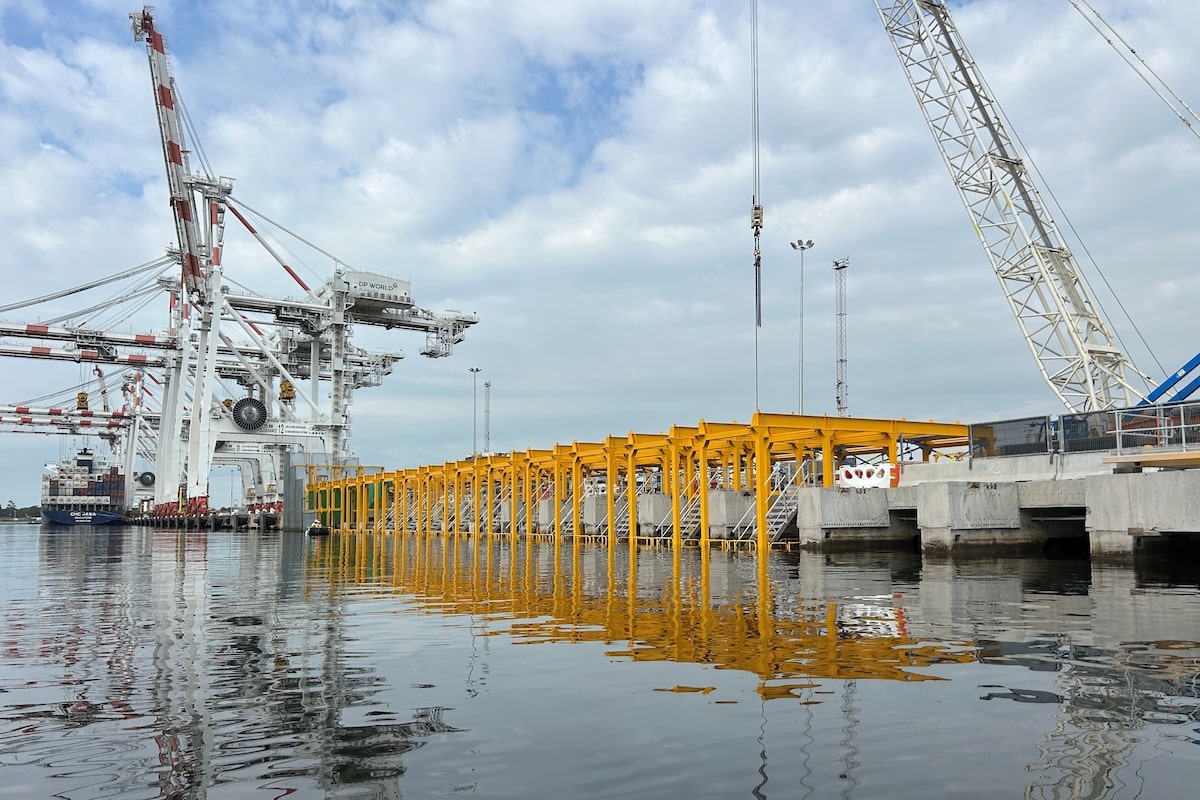
“About 70 per cent of our work is under the wharf, in water and in difficult access conditions. In most areas, people would be working in waders, waist-deep in water,” he says. “We knew the conventional approach of working from boats and floating platforms wouldn’t be the best solution. As a team, we developed what we call the paperclip access platforms, because they clip onto the wharf.”
The platforms were sketched with McConnell Dowell’s temporary works team and presented to Port of Melbourne as a way to improve access, safety and productivity.
“What was incredible about Port of Melbourne was that they saw the vision. They understood the benefit and worked with us to make it happen,” says Juneja. “Within a month, we had the instruction to proceed with fabrication.”
There are now 44 paperclip access platforms in place, and feedback from the site team has reinforced why the idea was worth pursuing.
“They provide a much safer and more productive way to work under the wharf,” says Juneja. “For me, that’s been a major win for the project. We identified the challenge, developed the solution in-house, worked with Port of Melbourne to bring it to life, and now have a system that’s changing how this kind of marine work can be delivered.”
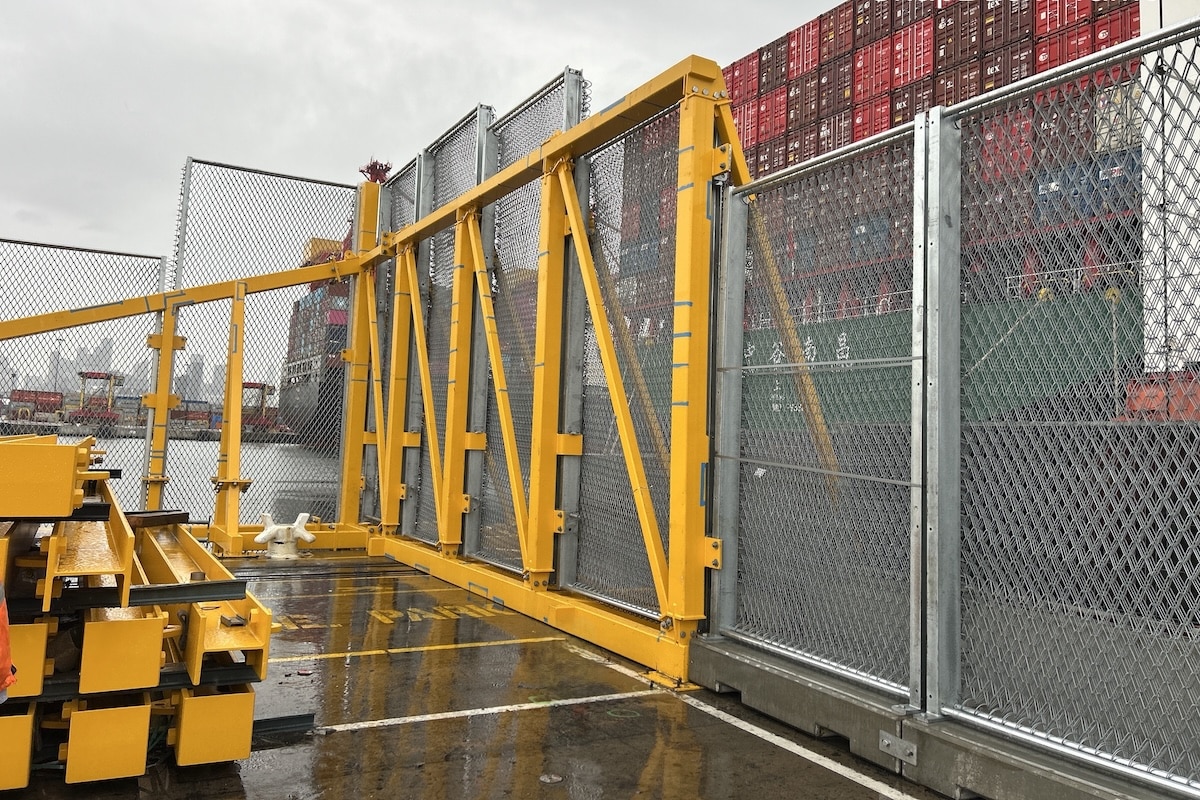
That willingness to challenge established methods has extended across the project. When ships berth beside the worksite, mooring lines present a safety risk. During Stage 1, exclusion zones were used, but those controls could limit access for days at a time.
For Stage 2, McConnell Dowell developed a different approach. The team worked with industry experts and designed a snapback protection shield, installed between the vessel’s mooring lines and the work area. If a line snaps, the shield helps protect the worksite and allows the team to manage the risk more effectively.
“That’s been one of the project’s important innovations,” says Juneja. “For me, that shows what we do well: we take the lessons, develop a better way of working, and help lift the standard for future projects.”
The technical demands of Swanson Dock West are only one part of the challenge. The terminal remains operational around the works, requiring constant coordination with the terminal operator.
“Everything we do in terms of planning and sequencing is focused on minimising disruption for the terminal operator and maintaining safe, productive access,” says Juneja.
“What’s interesting about this project is that, although it’s a construct-only contract, the way it’s being delivered is highly collaborative. A lot of that comes down to the culture built on the project and the long-standing relationship between McConnell Dowell and Port of Melbourne.
“People often talk about collaborative contracting and the contract models that support it, but I strongly believe collaboration doesn’t come from the contract alone. It comes from the people in the room and their mindset. Effective collaboration is about transparency, raising issues early and solving problems together.”
Making space for growth
By the time Juneja joined Swanson Dock West, he had already learned that the project manager’s job isn’t to be the quickest person with an answer. On Stage 2, many of the challenges are familiar to him. The difficulty isn’t always knowing what to do; it’s knowing when to let the team get there first.
He followed the technical pathway himself, from cadet to site engineer, project engineer, senior project engineer and construction manager. He understands the instinct to step in and solve problems. But on a project of this scale, he says leadership also requires restraint.
“A big part of leadership is letting the team work through the issue, consider the options and come back with a solution themselves,” says Juneja. “That’s how people grow.”
He has carried that same thinking into the Stage 2 team. Many people who worked on Stage 1 have continued on the project, carrying hard-earned knowledge into the next phase. But Juneja also made a deliberate choice to move people into different scopes, giving younger engineers exposure to new disciplines while keeping experienced support close enough to guide them.
It reflects the way his own career was built, with responsibility and support in equal measure. Now, part of his role is to create that environment for others. He wants people to test their thinking, build confidence and take ownership, while knowing they aren’t being left to work through complexity alone.
For Juneja, that people-focused legacy is one of Swanson Dock West’s most important outcomes.
“Seeing people start as graduate engineers, develop their capability, move into project engineer roles and take on more responsibility has been rewarding,” he says. “The lasting impact isn’t only the infrastructure we leave behind, but also the people who have grown through the project. They are the future leaders of McConnell Dowell, and seeing their careers develop is something I am very proud of.”
He also hopes the project sets a higher standard for this type of work.
“Some of the innovations we have developed on the project, such as the snapback protection shields and the access platforms, have the potential to become standard practice on future marine projects,” says Tanuj Juneja. “It would be great to look back in 10 years and see those solutions accepted as the normal way of working, with the industry continuing to build on them and find even better ways to deliver this kind of work safely and efficiently.”
It’s a fitting ambition for a project director who knows leadership isn’t about having every answer; it’s about creating the conditions for better answers to come forward.
The post How McConnell Dowell’s Tanuj Juneja leads complex projects appeared first on Inside Construction.
View Source


Comments
Post a Comment