
Construcciones Yamaro: Deck Claw gives timber decking a hidden edge
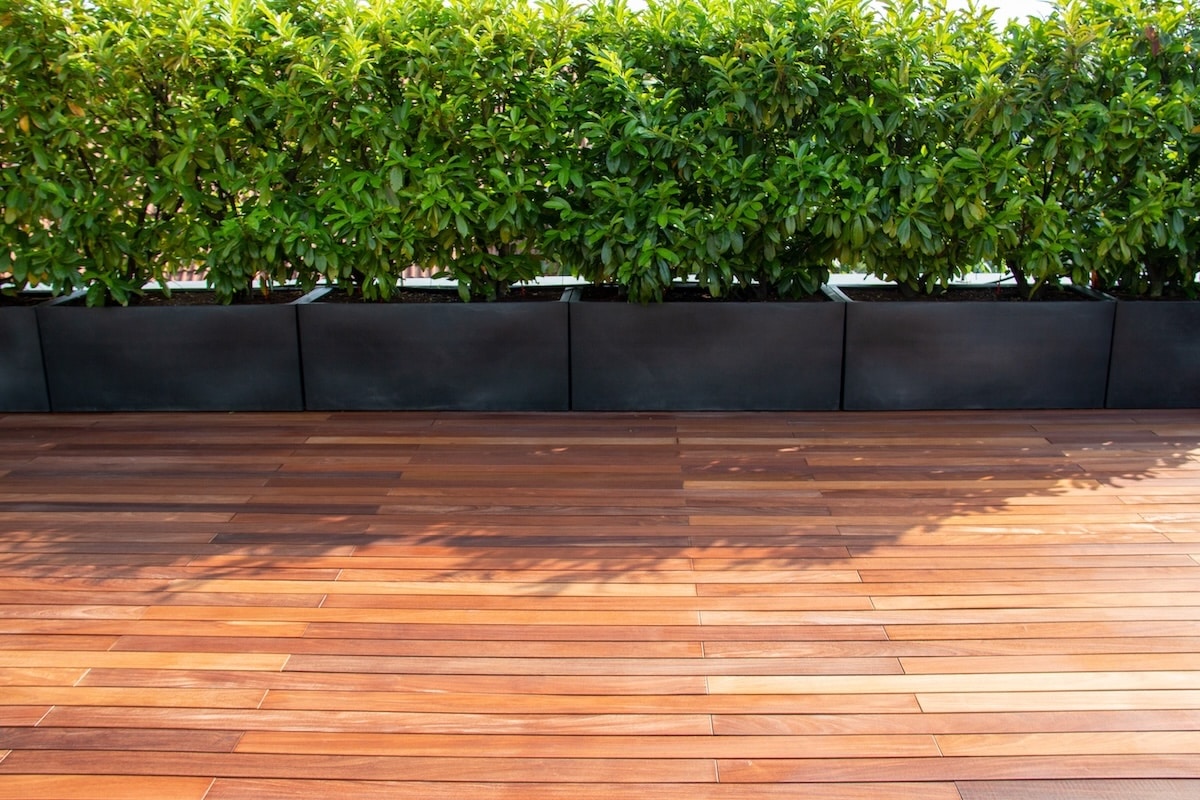
Deck Claw is bringing a cleaner finish to timber decking without slowing the job down.
Australians are particular about decks. Whether it’s a restaurant terrace, a hotel pool surround or a backyard barbecue area, the finish has to present well, feel good underfoot and stand up to heavy use, weather and maintenance cycles.
Hardwoods such as Merbau are popular because they can withstand high pedestrian traffic while bringing warmth and texture to commercial and outdoor spaces. Their strength and durability also make them suitable for exposed environments, including coastal locations.
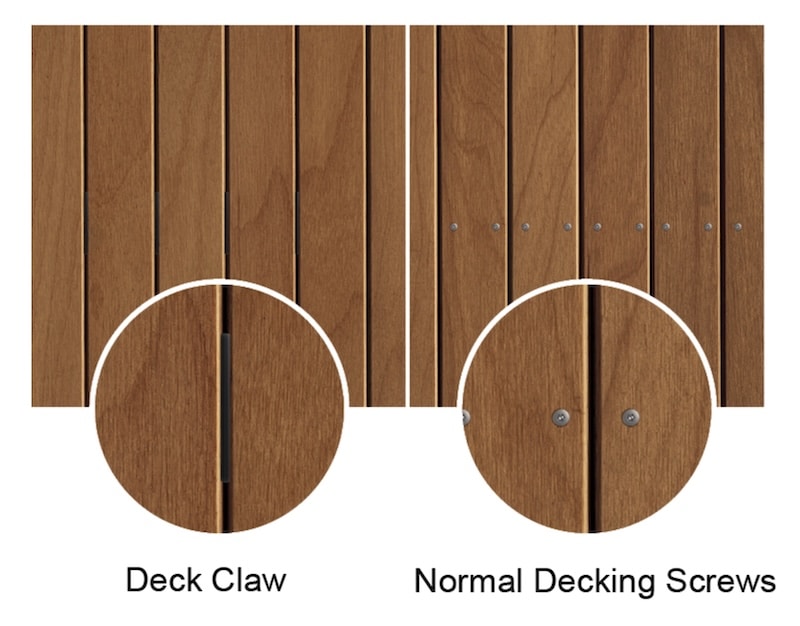
Achieving that result, however, often comes down to how the boards are fixed. Visible screws can interrupt the appearance of a deck, while some concealed systems limit board selection or require additional preparation.
Malcolm Skuse, Townsville branch manager at Hobson Engineering, says Deck Claw was developed to address some of the trade-offs associated with concealed fixing systems.
While many concealed decking systems rely on composite products or boards with a machined side groove, Deck Claw bites directly into the side of a standard square-edged timber board, allowing installers to achieve a concealed finish without pre-grooved material.
Related stories:
- Coating steel fasteners against corrosion
- Behind tilt-panel construction
- Material handling and lifting hardware that performs under load
“Builders and specifiers are looking for decking systems that are easy to use, quick to install and cost-effective, while still delivering a clean, high-end finish,” says Skuse.
“Deck Claw can reduce labour time by up to 50 per cent by simplifying the installation process. With labour costs and shortages continuing to rise, reducing installation time can help contractors complete projects more efficiently and free up crews for other work.
“Once the boards are set out and the installer is prepared, a 10-square-metre section can be completed in under two hours.”
The system uses a clip at each joist between the decking boards. The first board is secured firmly to keep the deck square, before the clips and following boards are positioned. Adhesive can also be applied between the board and joist to increase holding power, reduce movement and create a more solid feel underfoot.
Ratchet straps can then be used to bring multiple boards and clips together at once, reducing the stop-start process associated with some traditional installation methods. As each screw is driven, the clip spreads and the claws bite into the edge of the board, pulling it down onto the joist while maintaining a consistent five-millimetre gap for drainage and expansion. Once the clips are screwed down, the cover strip conceals the fixing point, leaving a nail-free, screw-free deck surface.
Gavin McPherson, lead engineer at Hobson Engineering, says the individual clip design gives builders greater flexibility with board layout.
“It can work with different board widths, and those widths can be combined to create different visual effects,” he says. “While it was designed primarily for decking, the same fixing method can also be used for applications such as privacy screens and horizontal timber slats.”

Because the system sits about five millimetres below the board surface, the deck can be sanded, re-oiled or polished without equipment contacting stainless steel screws, making maintenance easier and helping preserve its appearance. If a board is scratched or damaged, the installer can remove the adjacent clips, replace the board and screw the clips back down.
“With some other concealed decking systems, you may need to start from one edge and dismantle sections of the deck to reach the damaged board,” says McPherson. “Deck Claw makes that repair process more straightforward.”
Designed and manufactured in Australia, Deck Claw was engineered with the country’s climate and exposure conditions in mind.
The claw mechanism that creates the concealed finish also gives the system 168 kilograms of downforce. When adhesive is added, holding strength increases to 360 kilograms.
“Deck Claw has been tested to withstand wind forces equivalent to a Category 4 cyclone, demonstrating its ability to perform on projects exposed to severe weather conditions,” says Skuse.
“For projects in high-wind regions, Hobson Engineering recommends using an adhesive such as Sikaflex 11FC between the joists and boards. In addition to reducing any hollow feel underfoot, the adhesive can further enhance the system’s uplift resistance and overall performance in cyclone-prone areas.”
With much of Australia’s population concentrated along the coastline, Deck Claw is also suited to coastal and saltwater environments, with stainless-steel screws offering corrosion resistance beneath the cover clip.
Being Australian made also gives Deck Claw greater control over supply and production. Hobson Engineering holds stock across its warehouses, and if demand increases, it can scale up quickly without relying on long overseas lead times.
“We are seeing interest grow – there is a strong appetite for natural timber decks. Deck Claw supports that by making timber decking easier to install and maintain, providing strength and durability, and creating a continuous surface,” says McPherson.
Deck Claw is a new direction for Hobson Engineering, but it sits naturally alongside its broader range of fastening products. The system adds to the company’s range of decking screws for traditional installation, giving builders a faster concealed-fixing option for timber decking.
The post Deck Claw gives timber decking a hidden edge appeared first on Inside Construction.
View Source


Comments
Post a Comment