
Construcciones Yamaro: Tarrsha Watkins: Proving another way can work
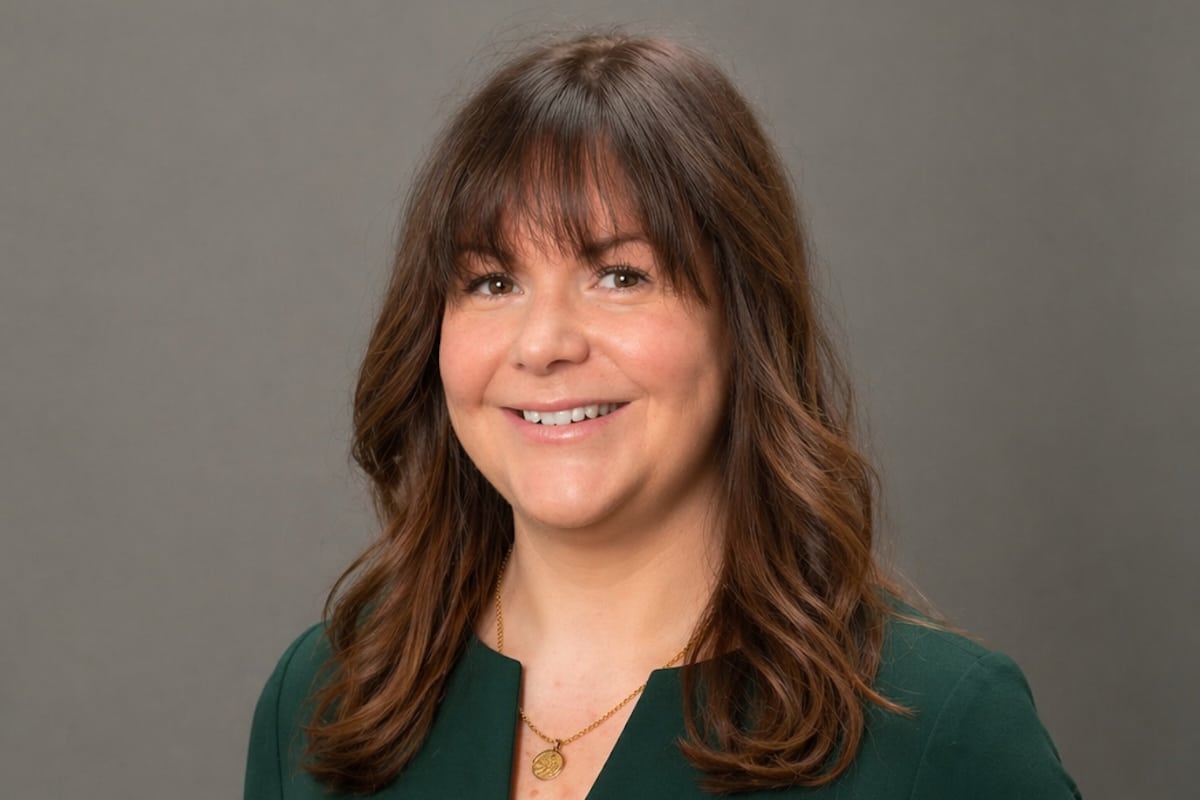
By questioning one of construction’s most entrenched working practices, Tarrsha Watkins is creating a different way for people to build a career in the industry.
Tarrsha Watkins didn’t set out to start a second construction business. She wanted to test an idea.
Years spent inside the industry had left her questioning whether it could genuinely broaden its workforce while continuing to expect people to fit around the same long, rigid working hours. Her answer would become Indigo Commercial.
The path to that idea began almost two decades earlier. Watkins grew up around construction, with her parents running a carpentry maintenance business. At about 17, she took on her first blue-collar role as a fencing labourer for her dad.
“I started at the bottom of the bottom of the bottom, and that was always my dad’s approach: if you’re going to do something well, you need to learn it from the start,” she says. “There was no special treatment. If you survived that, you could move into other things, which I did across many different roles.”
She wasn’t convinced the family business would be where she built her career. Watkins had what she describes as a stubborn determination not to rely on it. For a period, she was running her own personal training business, helping her mum with administration, joining her dad on site and working in hospitality.
“I remember sitting there one weekend and realising I had to pick a direction because I had too many things going on. The person I was working with in personal training had asked if I wanted to partner with them and take what we were doing to the next level. At the same time, my parents wanted to start stepping back from their business,” she says.
“I decided to go all in on the building industry. It just makes sense to me, and it always has. I love it even now. Even on the hard days, I still love it.”
Working inside her parents’ business exposed her early to the gulf that can exist between what large clients expect and what smaller contractors have the resources to provide.
“It was a mum-and-dad operation dealing with big-business problems but with small-business resources,” says Watkins.
The company often worked for larger builders or on government contracts. There wasn’t a legal department to interpret agreements or a human resources team to call on. Watkins remembers her mum completing invoices at the dining room table while the business was being asked to produce documents such as safety management plans.
Rather than accept that divide, she became curious about it. She wanted to understand the contracts they were signing and the risks sitting behind them. She wanted to know how larger systems operated and how a smaller contractor could work within them without leaving itself unnecessarily exposed. That instinct began shaping the way she approached the company.
“I started looking at the business almost like a project: identifying what wasn’t working and working out how to improve it,” says Watkins.
Related stories:
- TAFE NSW plumbing apprentice follows family trade
- Laing O’Rourke backs Kany Bidi growth
- Institute for Women in Construction champions bold thinking
Learning what leadership means
In 2012, she became managing director of the family business, Protek WA. At the time, the title was partly functional. It made it easier for her to deal with banks and manage business relationships for her parents.
Two years later, she was forced to confront what the title required of her. The business had become heavily reliant on one client. Watkins says the arrangement left the company exposed in ways the family didn’t fully understand, and in 2015 about 80 per cent of its work disappeared at once. There were around 50 people in the business.
“I remember getting the phone call on a Wednesday afternoon,” she says. “I had no idea where our next job was coming from, so I called an emergency meeting with our crews for the following morning.”
She stood in front of the team and told them what had happened. She couldn’t promise what would come next. What she could promise was that she would do everything possible to fix it. Anyone who wanted to leave could do so without hard feelings.
One employee had been with the company for only about a week. He told Watkins that when similar situations had unfolded at previous employers, workers had simply turned up one morning to locked gates. Her willingness to tell the team the truth convinced him to stay. Others chose to leave.
“That experience cemented for me what leadership really means,” she says. “When things go well, your job is to stand behind your team and recognise their efforts. When things go badly, your job is to stand in front of them, be honest about what is happening and take responsibility for finding a way through it.”
Finding a way through meant replacing the lost work. Watkins had never written a tender, but she began searching for opportunities. When a client she wanted to work with released two tenders, she decided Protek WA would pursue both.
There was an immediate problem: the tender process also called for ISO compliance. Protek WA didn’t have it, and paying a consultant to develop what was needed was beyond what the business could afford. So Watkins taught herself how to write the tenders and develop the required safety and quality management systems.
“We ended up winning both tenders, and we still work for that client today. I’ve kept copies of those original tender submissions, and when I look back at them now, I can see just how far we’ve come,” she says.
“I’d promised the team I was going to fix the situation and that I would do whatever it took. That’s what we did. There are still people on the Protek WA team today who were with us through that period.”
But accepting the responsibility of leadership didn’t mean confidence came easily. Watkins recalls sometimes becoming physically sick before running HSEQ meetings because she was so nervous about standing in front of a group to deliver a talk or toolbox.
Mentoring became important. Watkins sought advice from people in Tier 1 building companies, and over time, some of the people she had once approached for guidance began coming to her.
“That helped me recognise that everyone brings different knowledge and experience to the table,” she says. “You don’t need to be the smartest person in the room. You need to listen to what everyone has to say, contribute your own perspective and then work out what you can use.”
After more than a decade as managing director, Watkins bought Protek WA from her parents in 2023, becoming sole owner and sole director. The transition was freeing, but she also wanted the company to reflect her leadership without stripping away the history that had created it.
“There are still parts of the business today that make me realise how much I’m like my dad,” she says. “Certain things will always reflect the tone he set, and others will always reflect the influence of my mum. Then there are parts that are completely me. I like that balance.”
Bridging the industry divide
Alongside her work at Protek WA, Watkins became increasingly involved in broader industry discussions. Her interest in industry bodies grew from watching her parents operate a small contracting firm and seeing how easily businesses like theirs could be absent from decisions that affected them. Owners were often too occupied doing the work and keeping the company running to spend time at networking events or industry meetings.
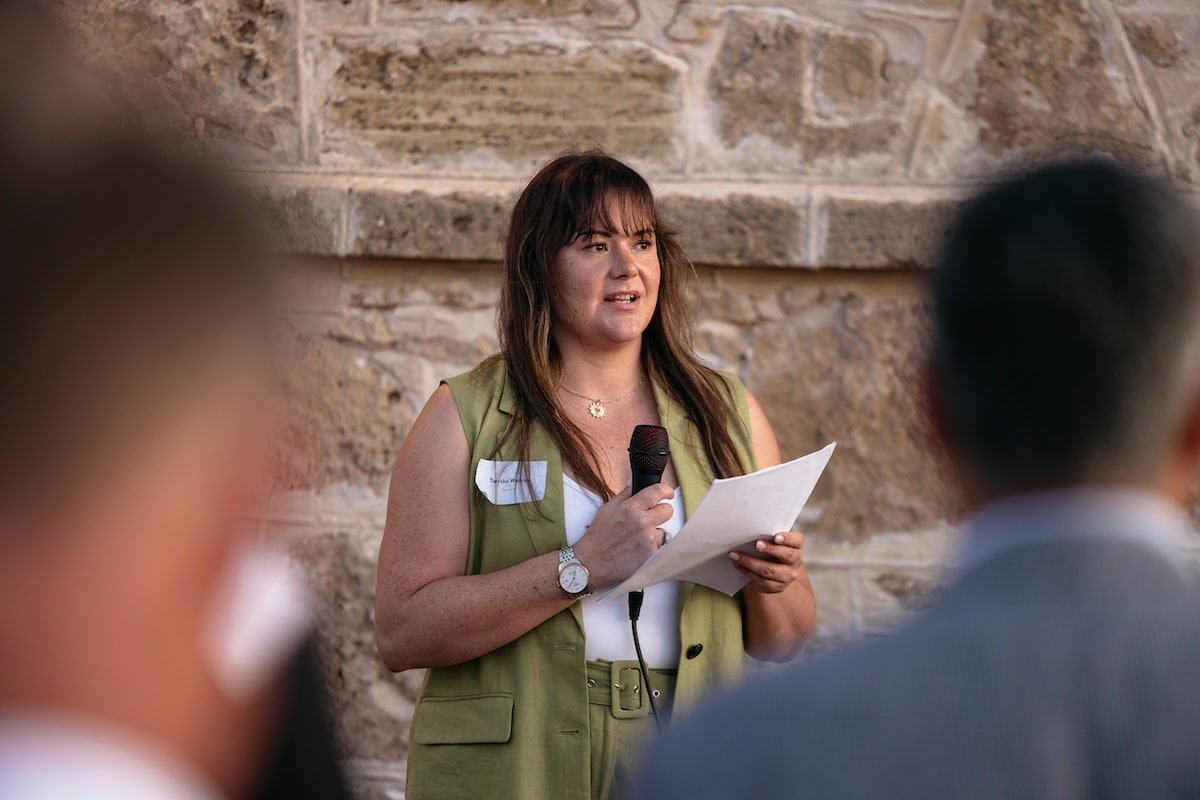
Through organisations including the Master Builders Association of Western Australia, Watkins sought to bring that small-business perspective into discussions about policy and legislation.
“It’s been rewarding to act as a bridge between smaller contractors, larger businesses and policymakers,” she says. “It used to be common for people and families to build a life around running a small trades business, and I want that to still be possible in 10, 20 and 30 years’ time.”
In 2025, Watkins was named a Business News 40under40 winner. She was pregnant with her second child at the awards night and had no expectation of hearing her name. In fact, she was eating dessert and not paying attention when it was called. Her partner had to nudge her.
“Afterwards, I had this strange adrenaline crash because I’d spent such a long time dealing with imposter syndrome. That was especially true while I was running a business that, technically, wasn’t mine,” she says.
“The award gave me a sense of validation. It made me recognise that I did know what I was talking about and that I had come a long way in my own career and with the business. Winning made me realise that I needed to stop doubting myself.”
Breaking down the barriers
Around the same period, a problem that repeatedly surfaced in industry discussions had captured Watkins’ attention: the shortage of skilled labour and the need to bring more women into construction. She began to question what that ambition required in practice.
“It’s easy to hold an International Women’s Day lunch and have cupcakes, but if we’re serious about bringing more women into the industry, we need to acknowledge the barriers they actually face,” she says.
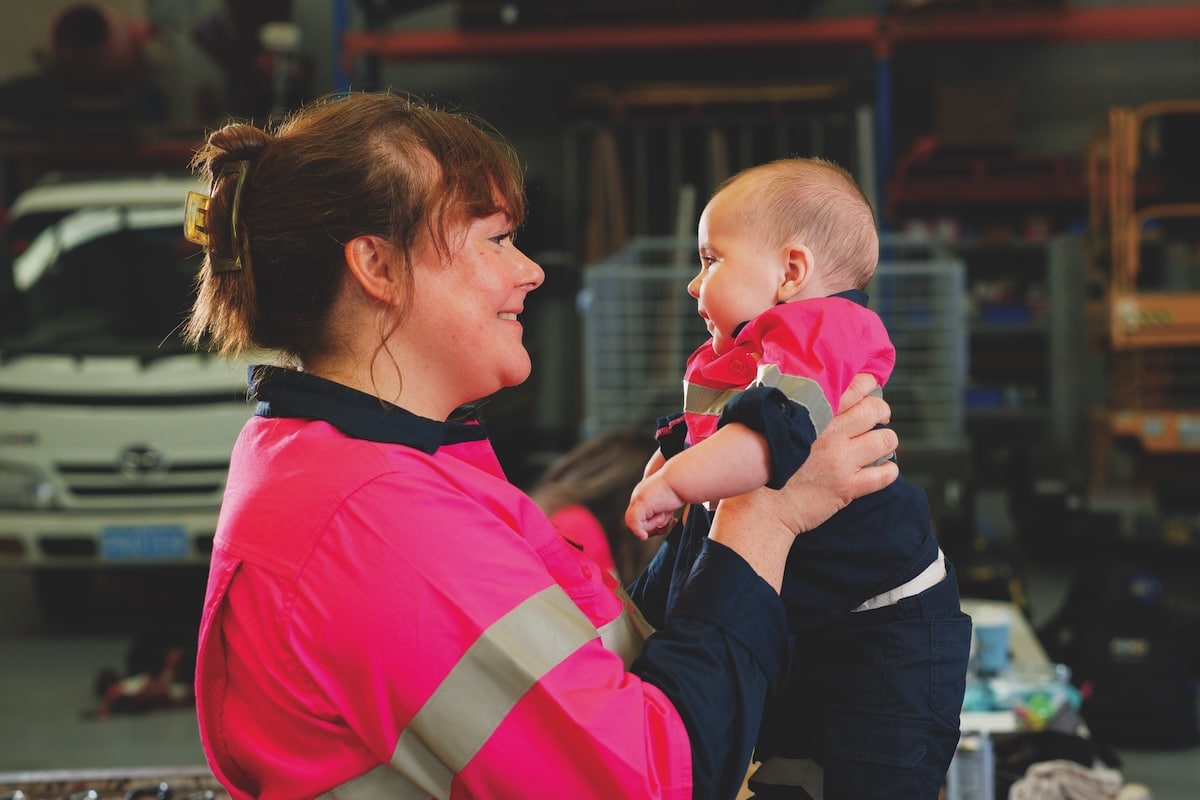
“I learnt that through my own experience. I started in the industry in a blue-collar role, working on the tools from 6am to 6pm, six days a week. I now have two children under two, and there is no way I would apply for that kind of role as a new mum.”
The problem, as she saw it, extended beyond women. Parents and other caregivers could be pushed out of construction when their lives didn’t fit its traditional working patterns.
Watkins decided to find out whether flexibility would make a measurable difference. She posted two identical job advertisements. The only change was the working hours and flexibility offered. Then she closed her laptop and went to bed.
By the following morning, hundreds of people had applied for the flexible role, compared with roughly 30 applications Protek WA would ordinarily receive for the same position.
“That was when I knew there was something worth pursuing,” says Watkins. “About a week later, I called my accountant and told him I had accidentally started a second business. Before I knew it, Indigo Commercial was up and running.”
Indigo Commercial’s workforce model starts with full-time employees, supplemented by people whose availability looks different. Among them are single fathers who had been at risk of leaving the industry because their working hours made it difficult to manage custody arrangements and school pickups and drop-offs, people who can only work week on, week off and others with regular commitments to their children. The arrangement is mapped through Indigo Commercial’s rostering system around each person’s circumstances.
“It might sound complicated, but it really isn’t,” says Watkins.
The same flexibility is necessary in her own life. Recently, one of her children woke at 3am. After settling them back to sleep, she had an idea for Indigo Commercial, made a coffee and worked on it for an hour before returning to bed.
Building for the next generation
Indigo Commercial is now extending that thinking to the next generation. Tarrsha Watkins is working with registered training organisations to develop apprenticeship programs with the same accessibility and flexibility as its full-time roles. Work with community organisations is also underway on after-school events intended to expose young people to trades.
“I’d be lying if I said I wasn’t proud of jumping feet first into launching Indigo Commercial,” she says. “It was a massive risk to put myself out there knowing full well that it could fail, particularly because making it work required such a big shift in industry mindset.”
Her motivation for taking that risk reaches back to the industry she entered as a 17-year-old digging fence holes, and to the small family business that taught her both how rewarding construction could be and how difficult it could be to navigate.
“I want to ensure small businesses continue to see it as an industry they want to be part of. Without small businesses, a lot of projects simply wouldn’t happen because they rely on smaller contractors to carry out much of the work,” says Tarrsha Watkins.
“I’ve always wanted to leave the industry better than I found it. I love this industry, and I want younger generations to get the same enjoyment from it that I’ve had. It would make me incredibly sad if younger people stopped seeing the building industry as a viable career path.”
The post Tarrsha Watkins: Proving another way can work appeared first on Inside Construction.
View Source


Comments
Post a Comment