
Construcciones Yamaro: Transmutation provides the evidence green procurement demands
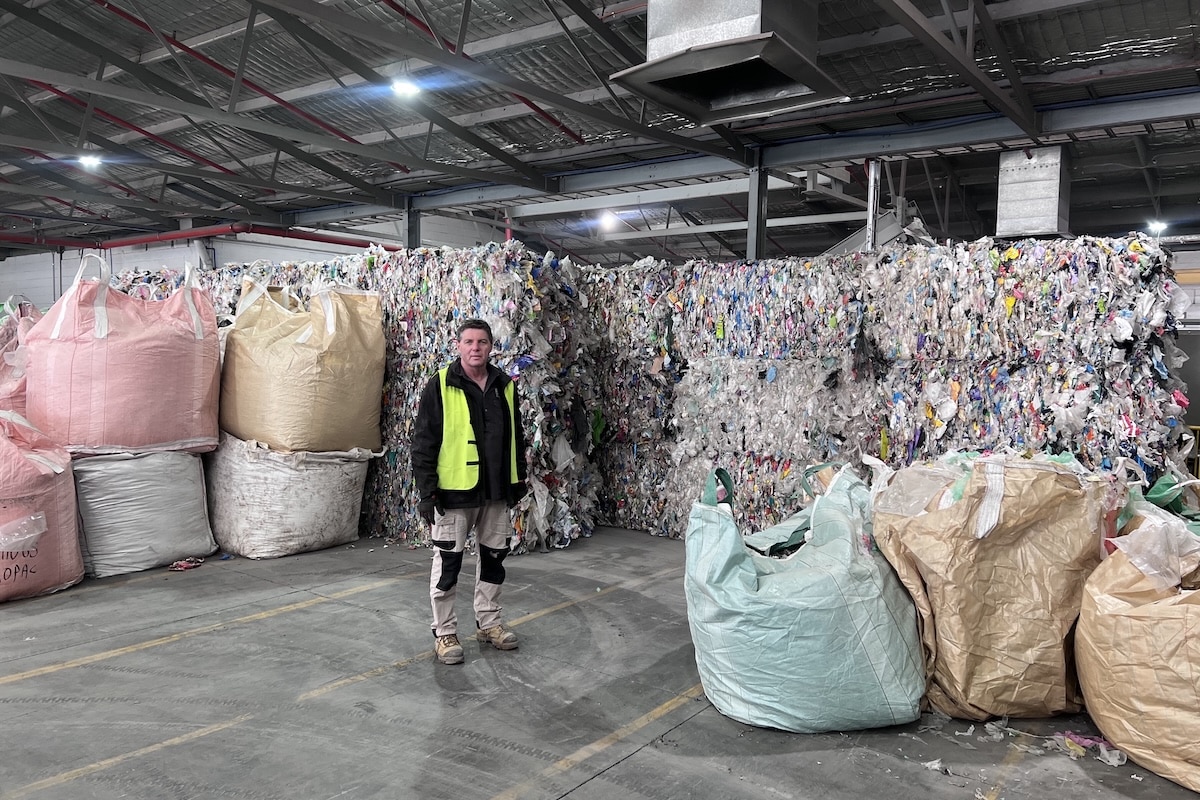
Formal credentials give construction contractors verified evidence for complex procurement and reporting requirements.
Construction procurement teams are being asked to assess a broader set of requirements when selecting products and suppliers, alongside technical specifications and price. They may also need evidence of embodied carbon, recycled content and material provenance, lifecycle impacts, Scope 3 emissions, ethical sourcing including freedom from modern slavery, local content and supplier environmental, social and governance (ESG) performance. It’s an ever-growing list, and one that is favouring suppliers that can provide credible evidence to support their claims.
As procurement criteria expand, so does the work involved in deciding whether supplier information can be relied upon. A product may be described as recycled, low carbon or sustainable, but contractors need to know what supports that claim, how the data was gathered, what part of the lifecycle it covers and whether it has been independently verified.
Transmutation has spent years putting that proof in place. The Australian business, which transforms second-use materials into industrial-scale products engineered to reduce embodied carbon, has invested heavily in formal accreditation and certification, alongside independently verified material data. It boasts ISO 9001 for quality management, ISO 14001 for environmental management and ISO 45001 for occupational health and safety, along with GECA certification, environmental product declarations (EPDs), ESG credentials and membership of the UN Global Compact.
Related stories:
- Transmutation joint venture closes the loop on low-carbon concrete
- Transmutation sets the terms for decarbonisation
- Park Agility strengthens parking infrastructure with Transmutation

For its first seven years, virtually all of Transmutation’s working capital has been reinvested into reaching the standard founder Brad Scott has set. There was no guarantee of an immediate return, yet the company worked to that standard while still establishing itself in the market.
“We made a deliberate decision about where Transmutation would compete,” he says. “As a smaller player, there was no point entering established markets with another version of what was already there. Bar chairs are a good example. There are plenty of them in the market, so we had to ask: what is going to make ours different?”
So why do it? Scott says it comes down to belief.
“There’s a thin line between delusional and genius,” he says. “While you’re building something like this, you don’t necessarily know which side of that line you’re on. If it works, everybody can look back afterwards and understand why we did it.”
His background in chemistry put product quality at the front of Transmutation’s strategy. Whatever category the company entered, he wanted its products to compete at the upper end of the market.
“But making high-quality, circular products wasn’t enough,” says Scott. “We wanted the credentials around them to be just as strong.”
For Scott, the investment was as much about the standard he wanted Transmutation to operate at as it was about satisfying customer requirements. The resulting certifications and verified product data give customers independent support for the company’s ESG claims.
“The objective was to remove as many barriers to procurement as possible. Whether somebody is a Tier 1, Tier 2 or Tier 3 contractor, if they have a set of criteria, we want to be able to meet those criteria at the highest level,” he says.
“That became our point of differentiation. We wanted to establish a niche around high-quality, sustainable products supported by high-level accreditation.”
Independent verification
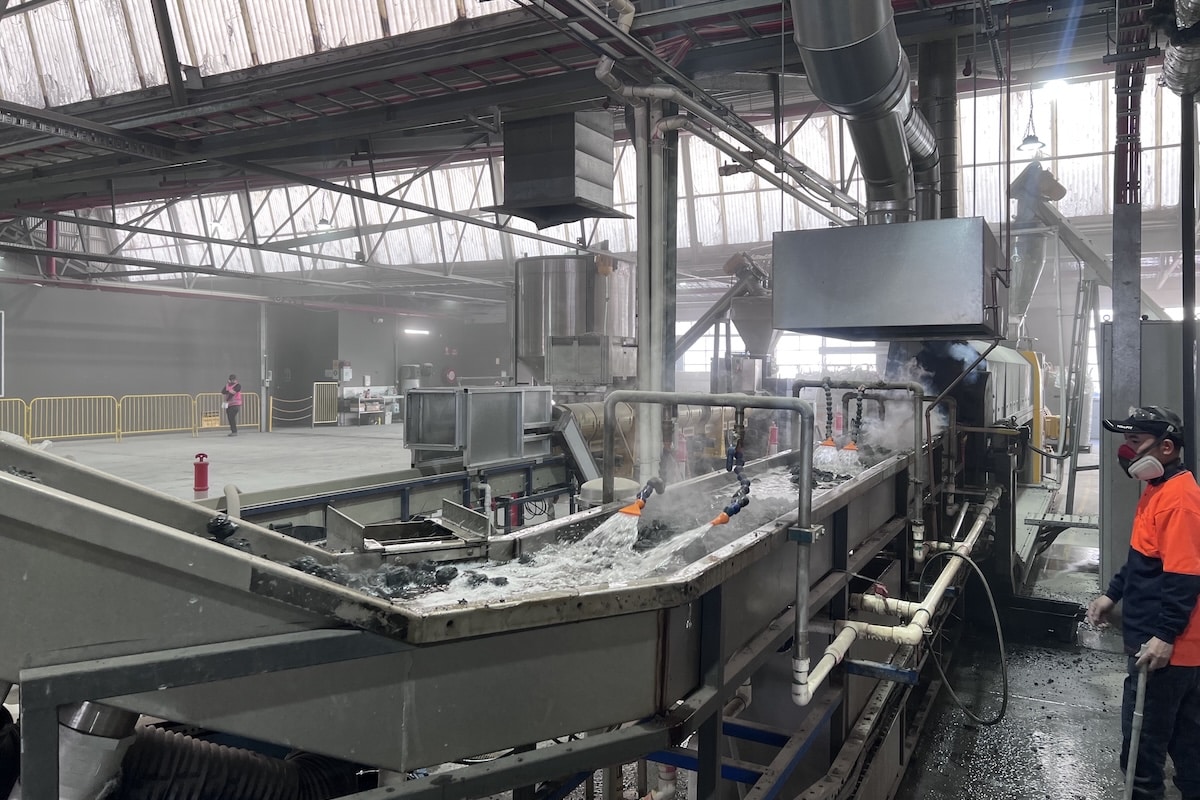
Transmutation was deliberate about choosing credentials that involved external assessment and were recognised in the market.
“We chose GECA because of the standard behind that certification and its recognition in the market. We pursued EPDs because they provide product-specific environmental information through an internationally recognised framework,” says Scott.
“It’s not just me out there telling people this is good. If we’re going to make a claim about a product, we want an independent organisation to have examined the evidence behind that claim.”
He also takes a global view of standards, arguing that an international benchmark can carry more weight than a manufacturer’s own definition of good practice. For contractors, the result is information that can be used in procurement, sustainability assessments and reporting.
Putting claims to the test
Supplier information can feed directly into a contractor’s own targets and reporting. Scope 3 reporting captures emissions across the value chain, environmental claims are subject to ACCC scrutiny and ASIC has pursued misleading ESG representations. Directors of entities captured by Australia’s mandatory sustainability reporting regime also have declaration obligations. Poor supplier information can therefore become a reporting, compliance and reputational problem for the contractor relying on it.
“The risks construction companies face when ESG claims from suppliers can’t be properly substantiated are much bigger than one product or one supplier,” says Scott.
He supports tighter scrutiny of greenwashing, particularly where one supplier has invested in verification, accreditation, testing and transparent data while another relies on environmental language in its marketing.
“Those two things should not carry equal weight. Greater scrutiny helps separate genuine environmental performance from environmental messaging, and that is good for the industry,” he says.
“Our position is: come in and look at what we do. We’ll show you the material, the process, the data and the systems behind it.”
Scope 3 reporting puts particular pressure on supplier data, because contractors can depend on information from across their value chains.
“The difficulty is that a large proportion of the supply chain won’t have accurate product-level data available,” says Scott. ”When that data isn’t available, companies have to use generic calculators, estimates and assumptions. Those assumptions tend to be conservative, so the reported figure can be substantially different from what the actual product footprint might be.”
Transmutation can instead provide product-specific environmental data backed by an EPD, giving customers independently verified information for the products they purchase.
While Scope 3 requirements are relatively new, Scott expects their influence on procurement to grow, even if the pace of change is harder to predict.
“If you look internationally at where regulation, investment and procurement are heading, measurement is becoming increasingly important,” he says.
“Governments and companies are making emissions commitments, and ultimately you can’t demonstrate progress against those commitments without reliable data. The companies thinking about it and focusing on it now are the ones that will end up ahead.”
Standards across the business
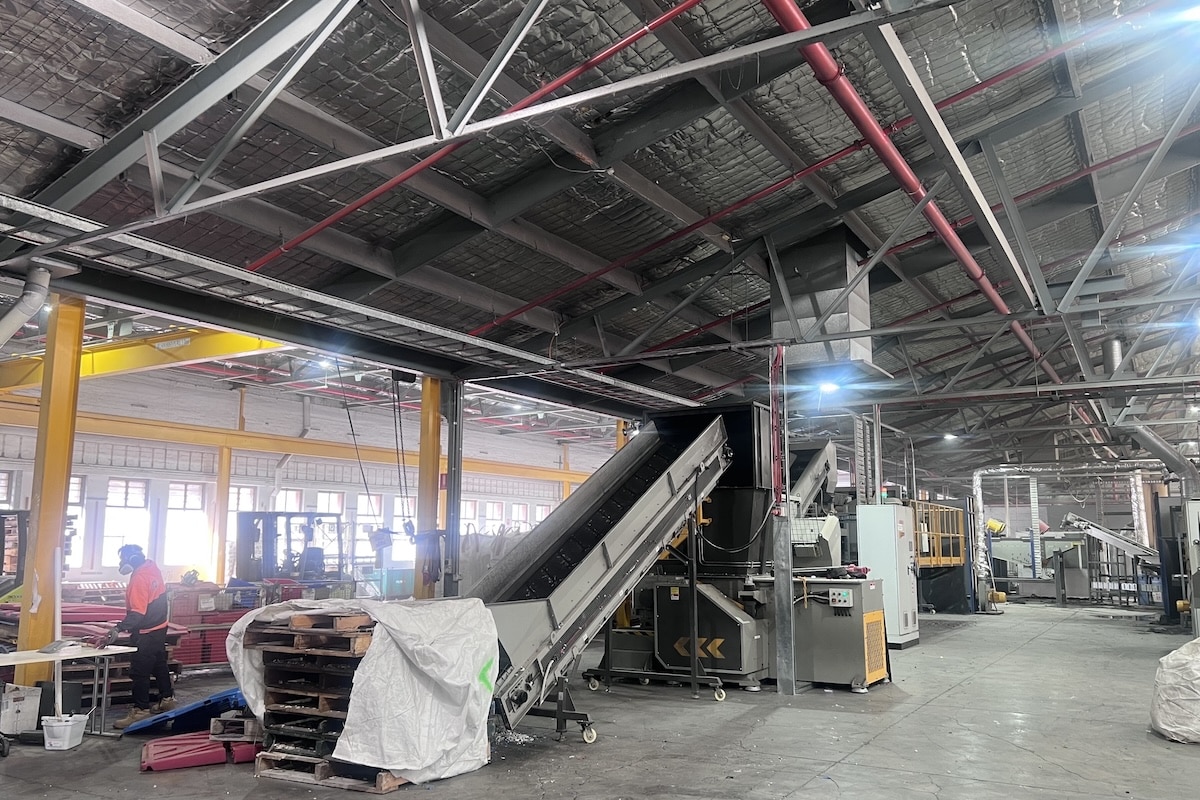
Transmutation’s broader credentials also apply to the way the business operates. Across standards and frameworks such as GECA, ISO and the UN Global Compact, the company has had to examine labour practices, health and safety, environmental management, resource use, waste, employment conditions and supply-chain issues relevant to ethical sourcing and modern slavery requirements.
“One of the things people underestimate about serious accreditation is how far into the business the audit process goes. It isn’t only somebody looking at the finished product and deciding whether it is good enough,” says Scott.
“It costs money. It takes time. It creates administrative work. External people come into your business and challenge what you’re doing. You have to provide evidence.”
That process has changed the business by forcing those areas to be examined systematically, rather than only when a problem arises.
Credentials as commercial currency
On major projects, procurement criteria can cover Green Star or Infrastructure Sustainability objectives, carbon targets, local content and broader social requirements. Transmutation’s EPDs provide product-specific environmental data, GECA adds third-party product certification recognised by major sustainability rating frameworks, its ISO certifications demonstrate audited management systems and its Australian manufacturing and 100 per cent Australian supply chain can support local-content requirements.
“This is where the different parts of the Transmutation model start working together. A single purchasing decision can contribute across several of those areas, so our products can provide multiple benefits at the same time,” says Scott.
“Our objective is to supply a high-quality, high-performing product at a competitive price, while also giving the customer verified environmental information, Australian-made content and evidence that can support their broader contractual obligations.”
Credentials in applicationPostPrime: An industrial-grade recycled resin made from Australian powder-coating waste as an alternative to virgin polymer. Resin8: A lightweight eco-aggregate made from mixed plastic and e-waste for use in concrete, asphalt and other construction materials. Low-carbon concrete: A multi-technology concrete system developed by SCG Transmutation to reduce embodied carbon across the mix. Bar chairs: Concrete reinforcement bar chairs manufactured from PostPrime resin. Wheel stops: Lightweight, shock-absorbing wheel stops manufactured from PostPrime resin for parking infrastructure. Jaffa Limestone Resin8 blocks: Reconstituted limestone blocks incorporating Resin8 to reduce weight and embodied carbon. |
The post Transmutation provides the evidence green procurement demands appeared first on Inside Construction.
View Source


Comments
Post a Comment