
Construcciones Yamaro: HBS-Bolts tackle the blind side of construction

HBS-Bolts address a problem that can complicate a steel connection: the installer can reach one side, but not the other.
It’s a common constraint when fixing into square or rectangular hollow sections, as the enclosed member leaves no way to place or restrain a nut behind the connection. The same access problem can arise where surrounding steelwork blocks the reverse side, while restrictions on hot works may rule out welding, the traditional way of fixing these types of connections.
Gavin McPherson, lead engineer at Hobson Engineering, says this is the central purpose of the HBS-Bolt range.
“Its primary application is for connections where access may only be permissible from one side of the connection or for fixing into hollow members,” he says.
For engineers and contractors, that inaccessible face can have a wider effect on the job. Through-bolting may require additional access so a crew member can reach the reverse side. Welding calls for specialist labour, equipment and hot-work controls, followed by touch-ups to the finish around the weld. Cutting an access opening into the member changes its appearance and may also affect its capacity. The HBS-Bolt avoids the need for reverse-side access by being installed from the accessible face.
Related stories:
- Deck Claw gives timber decking a hidden edge
- Coating steel fasteners against corrosion
- Behind tilt-panel construction
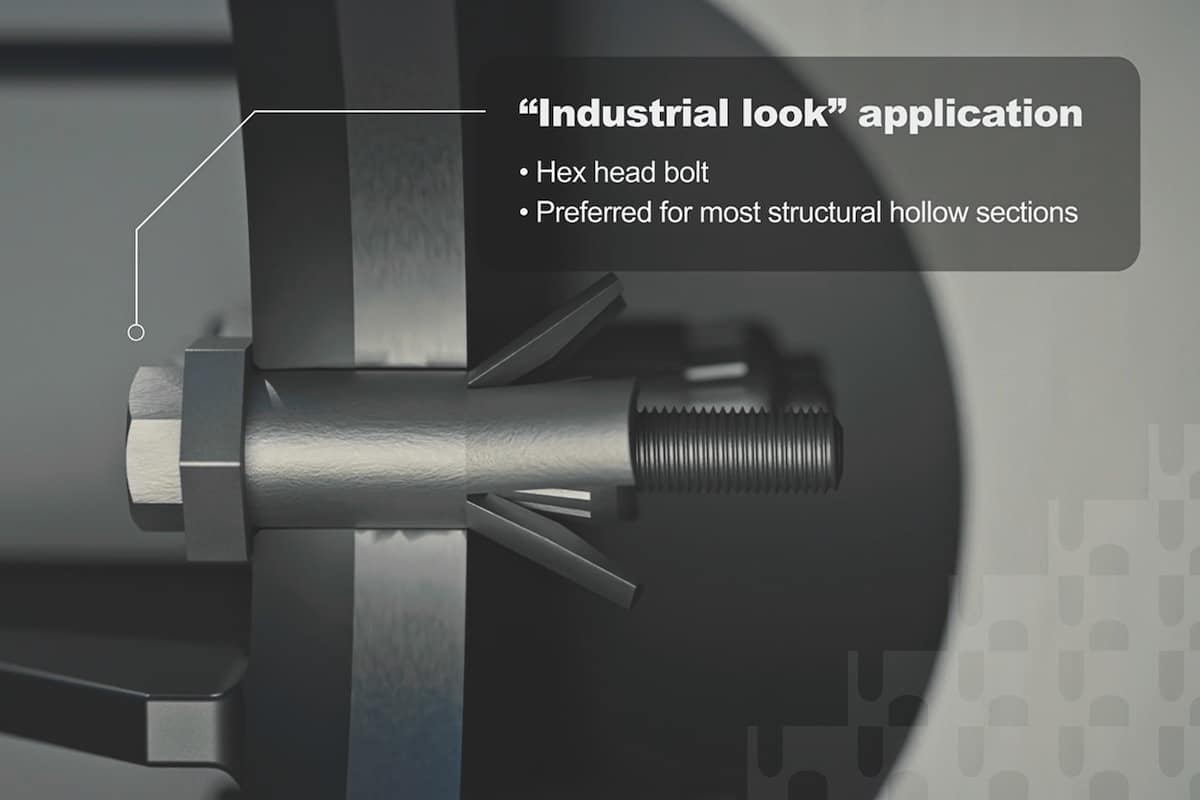
“Think of it as an expanding anchor for steelwork,” says McPherson. “Once the HBS-Bolt is inserted into the steel and tightened, an internal cone piece expands the HBS sleeve within the steelwork, clamping the plies together to provide sufficient restraint.”
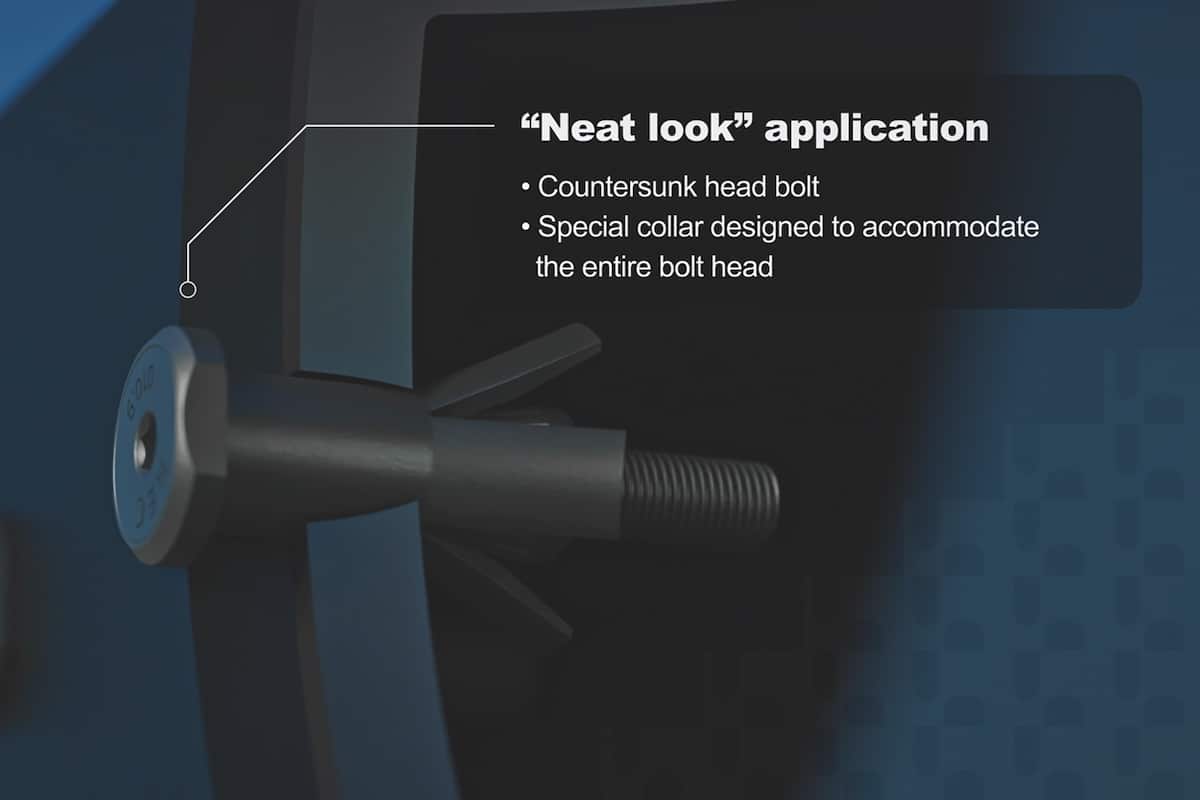
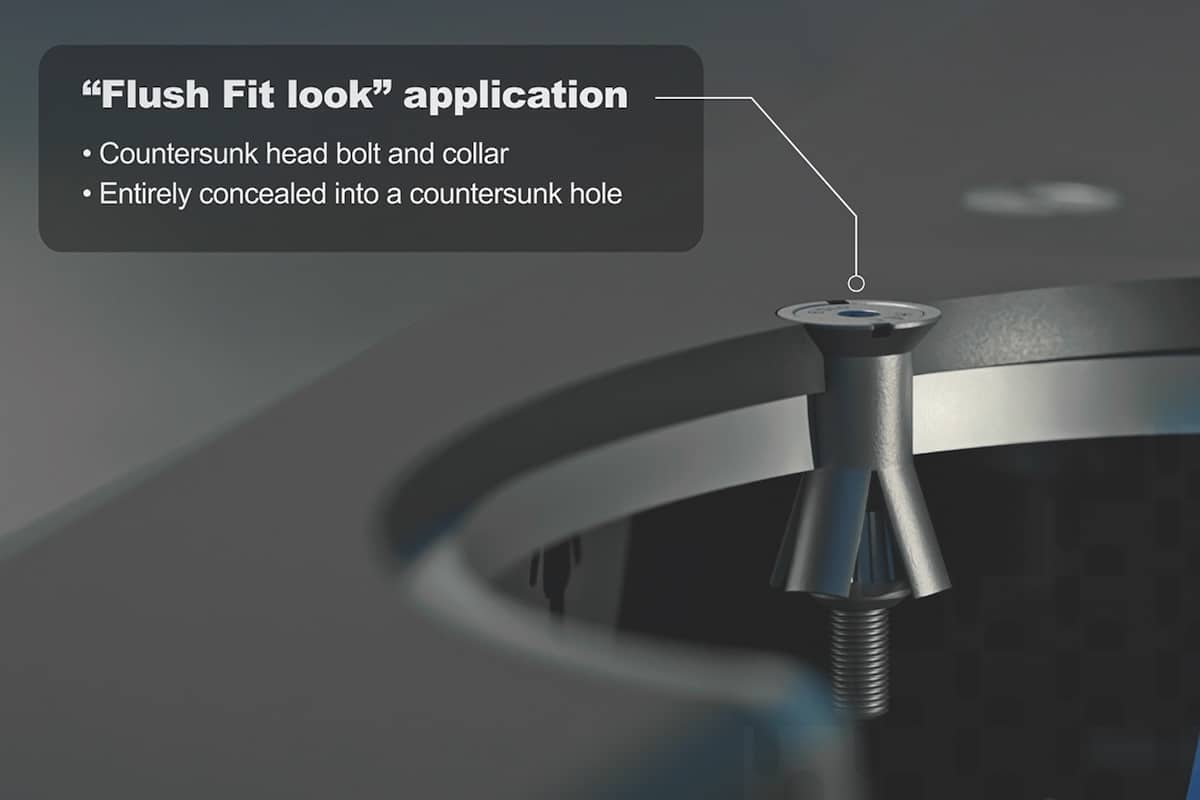
Hobson Engineering offers HBS-Bolts in three or five-part assemblies and a range of lengths and diameters, with hex, countersunk and flush head types to suit different technical and aesthetic requirements. Hex heads are commonly used for structural applications, while countersunk and flush options provide lower-profile finishes where the appearance of the connection is important. Stainless steel can also be specified in these applications, with the added benefit of corrosion resistance.
High shear and tensile capacities and a large grip range make HBS-Bolts suitable for many steel connections, including square, rectangular and circular hollow sections and steel framework such as gantries, bridges, stadiums and transmission towers. The system is engineered to resist vibration and fatigue, with interlocking grooves on the cone designed to prevent loosening.
“Correct hole size in the steelwork is critical to the performance of these products. Minimum ply thicknesses and grip range are also important factors to consider when designing the connection,” says McPherson.
“Engineers should be mindful that the capacity data provided for HBS-Bolts relates to the product itself, and that the local strength of the steelwork should be considered when designing the connection.”
There are limits to where HBS-Bolts can be used. McPherson cautions against treating the product as a direct substitute for every bolting arrangement. For instance, the product is not suitable as a replacement for 8.8/TB or TF connections, which require high tensile or clamp loads.
The suitability of the product should be assessed and approved by an appropriate engineer for each project scenario. That review needs to consider the complete connection, not only whether the fastener fits into the available space.
Correct installation is equally important, particularly the tightening torque.
“Ensuring the correct installation torque is used is most important,” says McPherson. “This ensures the product is set correctly without overstressing the components.”
On site, one-sided installation can reduce both labour and access requirements.
“The use of HBS-Bolts is much quicker and safer than welding on site,” says McPherson. “Installation can be performed by a competent labourer, which means specialist trades such as welders are not required. It can also remove costly access requirements where the other side of the steel would need to be reached for through-bolted connections.”
As with all its products, quality assurance is built into Hobson Engineering’s HBS-Bolt range. The company’s quality management system is ISO 9001-certified, while its fastener testing facility is accredited by the National Association of Testing Authorities (NATA).
European equivalents to HBS-Bolts may carry a European Technical Assessment (ETA), but ETA approval is not required for steel connections in Australia. Hobson Engineering has nevertheless designed and tested the HBS-Bolt range to the requirements of European Assessment Document EAD330001-00-0602, and verifies the performance of each batch in its NATA-accredited laboratory before release to market.
“This ensures consistent performance before the product is released for sale,” says McPherson.
Full traceability is provided through the trace number on the product label, which allows users to access the relevant certificates and documentation through Hobson Engineering’s website. Unique test reports for each batch are also available free of charge.
HBS-Bolts have a specific role: giving project teams a structural fastening option when only one side of the steel can be reached. With the connection assessed by an engineer and the installation requirements built into the work, an access problem can be resolved in the connection detail instead of being left for the site crew to solve.
The post HBS-Bolts tackle the blind side of construction appeared first on Inside Construction.
View Source


Comments
Post a Comment