
Construcciones Yamaro: MHIAA responds to changing ventilation demands
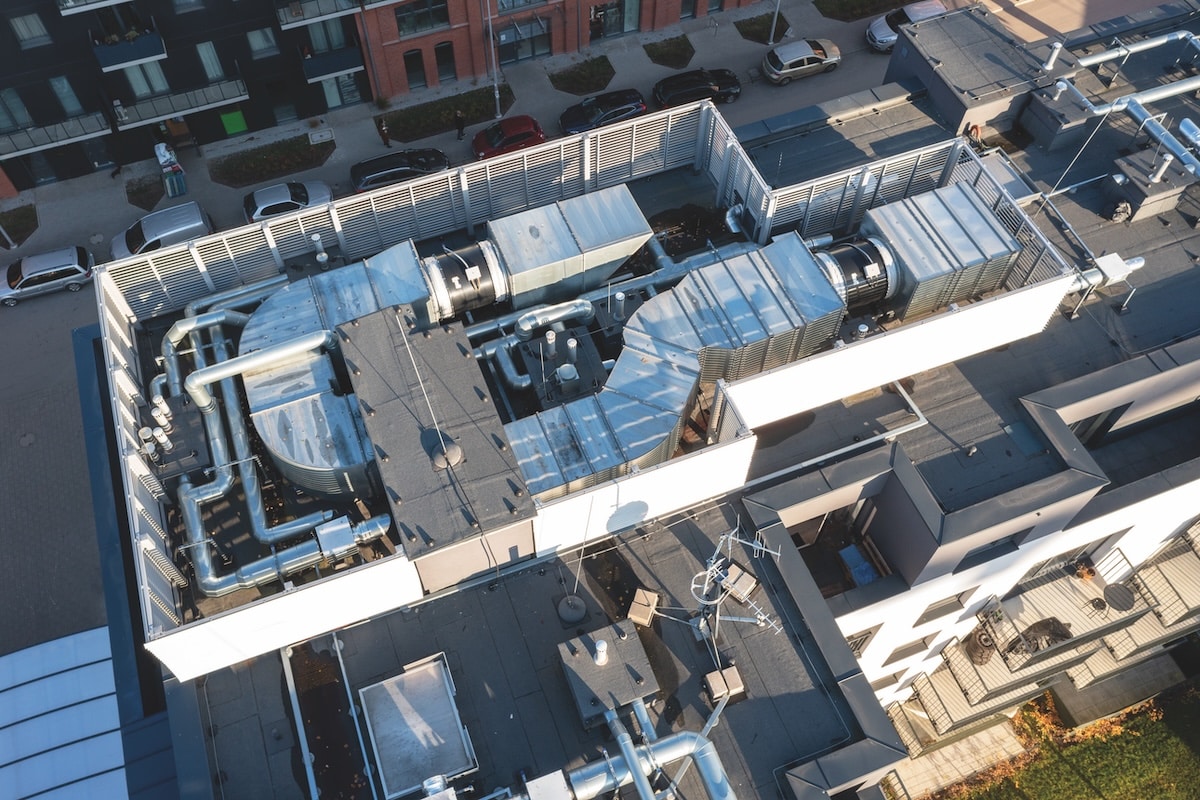
Commercial construction and data centre projects are demanding more from ventilation, with indoor air quality, comfort and efficiency shaping system design.
A commercial building can have the right heating and cooling capacity on paper and still fall short of what tenants and occupants expect from the space. Air quality, temperature stability, humidity, filtration and fresh-air delivery all shape the indoor environment, while energy use and available plant space place their own demands on the mechanical design.

Roy Arindam, national commercial manager at Mitsubishi Heavy Industries Air-Conditioners Australia (MHIAA), says those expectations are changing quickly, particularly in major commercial markets.
“Landlords, tenants and occupants are much more focused on air quality, but it can’t come at the expense of energy efficiency,” he says. “It’s about finding the right balance between indoor air quality, efficiency and maximising available space, including being able to manoeuvre equipment into constrained areas.”
Different buildings, tenancies and occupants can place very different demands on the systems serving them.
“A one-size-fits-all approach is becoming less suitable because different occupants have different requirements,” says Arindam. “It’s about understanding the space, the way it will be used and the level of comfort and control the tenant expects, then designing the system around those needs.”
Air handling units (AHUs) play a central role in responding to those demands. As part of a heating, ventilation and air conditioning (HVAC) system, an AHU filters, conditions and moves air through a building. Depending on the application, it can handle fresh air, recirculated air or a mixture of both while helping maintain the temperature and humidity required within the occupied space.
For medium, large and more complex buildings, the ability to move substantial volumes of treated air makes the AHU a key part of the ventilation strategy. It also raises a design question: how should that air be conditioned before it is distributed?
MHIAA’s Direct Expansion – Air Handling Unit (DX-AHU) solution brings the flexibility of variable refrigerant flow (VRF) technology to commercial applications requiring large volumes of conditioned air, including data centres, supermarkets, government buildings, entertainment and aquatic centres and healthcare facilities. Developed with Pacific Ventilation, it combines a modular AHU with MHIAA’s KX VRF system, allowing each installation to be configured around the building.
Compared with a conventional chilled-water AHU system, the key difference is how the air is conditioned within the AHU. The DX-AHU couples the AHU with MHIAA’s VRF system through a direct expansion (DX) heat-exchanger coil, with the VRF system providing the heating and cooling capacity while the AHU moves and distributes the conditioned air through the building.
Related stories:
- MHIAA launches large-capacity R32 VRF systems in Australia
- Q-ton turns up the heat on efficiency
- AI tools to improve HVAC worker safety on construction sites
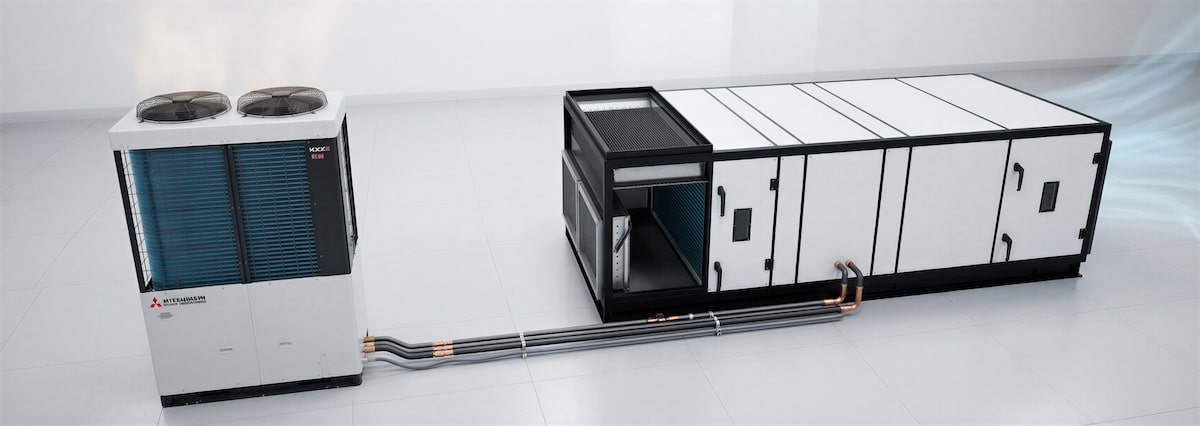
An electronic expansion valve (EEV) kit provides the interface between the VRF condenser and the DX coil. Comprising an EEV-control assembly and an EEV-set, it regulates the flow of refrigerant through the coil so the system can adjust the heating or cooling delivered according to demand.
“DX-AHUs become relevant in commercial buildings that need to move larger volumes of air,” says Arindam. “They can work as a supplementary system for an individual tenancy or as the primary solution where a chilled-water system may not be practical or economical.”
From a capital-cost perspective, Arindam says a DX-AHU can offer a more economical option than a chilled-water system in the right application.
“That’s one reason we’re seeing more landlords and project teams consider this approach,” he says. “It’s also supported by the growing acceptance of VRF technology, which has become much more established in the commercial market over the past 10 to 15 years.”
The collaboration with Pacific Ventilation expands the range and scale of applications MHIAA can address. Pacific Ventilation supplies the physical AHU, including the fan, DX coil, filters and other internal components, while MHIAA supplies the VRF condenser and EEV kit.
“The collaboration came from recognising a gap in the market,” says Arindam. “MHIAA already had a strong product range for the commercial sector, but when projects required larger volumes of air or more customised designs for larger spaces, we needed to bring in additional air-handling expertise. Pacific Ventilation was already well established in large fans and AHUs, so there was a natural fit between the two businesses.”
The AHU is modular, with each function housed in one or more modules that can be configured for different applications. The range spans cooling capacities from 25kW to 150kW and airflows from 580L/s to 7,500L/s, while MHIAA’s VRF systems range from 22.4kW to 168kW and can be combined for larger commercial applications.
Project teams can therefore match the AHU, fan, motor and condenser capacity to the required air volume, temperature conditions and available space. Discharge can also be arranged to suit the installation, including side, top or horizontal configurations.
For outdoor installations, the AHU can also be supplied as a roof unit with different roof configurations. Depending on the project, the platform can also incorporate heat recovery, sound attenuation and dampers, while its modular construction can assist with transport, staged installation and working within rooftop or plantroom constraints. Current projects show how different those configurations can be.
“A good example is a large data centre we’re currently designing, where the project required vertical air discharge,” says Arindam. “That isn’t an unusual configuration, but it’s not something used on every project. We worked with Pacific Ventilation to design a top-discharge unit around the dimensions of the corridor and the area it needed to serve. The idea was to configure the equipment to suit the available space, rather than make the building accommodate a predetermined unit.”
The same project reflects changes in how data centres are conditioned. As facilities become more AI-focused, more cooling is being concentrated directly around servers and equipment. Corridors, larger open spaces, and front and back-of-house areas can then have different conditioning needs, with the DX-AHU used to introduce large volumes of fresh air while maintaining the required conditions.
A large aquatic and entertainment centre presents a different operating environment. Originally designed around a chilled-water system, the project was reassessed with the council before a DX-AHU solution was developed to maintain the specified temperature and humidity. The roof-mounted units weigh between 5,000kg and 6,000kg and measure about four metres wide.
Filtration has also taken on greater importance as building owners and occupants pay closer attention to indoor air quality following the COVID-19 pandemic. The DX-AHU can be configured with different levels of filtration depending on the building and its use.
“Landlords and tenants are placing much greater emphasis on indoor air quality, and that’s influencing the level of filtration specified for commercial buildings. Because the AHU is modular, the number and type of filters can be configured around the requirements of the building and its occupants,” says Arindam.
“Depending on the application, that could mean standard filtration, high-efficiency particulate air (HEPA) filters or more specialised filtration for environments with higher air quality requirements. A laboratory, for example, may require a different level of filtration from a typical commercial office.”
Control strategies can also vary between projects. The EEV kit allows the VRF condenser and DX coil to operate together, with supply or return-air temperature control available according to the application. The system can also connect with central controllers and building management systems (BMS).
For MHIAA, tailoring a system to a project does not mean stepping away from established engineering and compliance requirements.
“As a Japanese manufacturer, MHIAA has a strong emphasis on compliance, quality control and the performance of our equipment. The challenge has been identifying the right partner and working together to develop solutions that can respond to more specific market requirements while still meeting those standards,” says Arindam.
That partnership gives MHIAA greater flexibility to respond to project-specific needs while maintaining its engineering, compliance and quality expectations. Independent certification provides an external measure of that performance.
“The main certification the Australian market looks for is Eurovent, and Pacific Ventilation carries an A+ Eurovent certification,” says Arindam. “That provides an important level of assurance when consultants and contractors are assessing whether a system meets the requirements of a project.”
The DX-AHUs are also designed to meet broader standards for hygiene, equipment performance and machinery compliance, including Eurovent EN 1886, VDI 6022-1, Eco design 1253/2014 and EU Machinery Directive 2006/42/EEC.
All DX-AHU solutions have the capacity to interface with relevant BACnet or Modbus gateways, which can then communicate with the BMS.
The longer-term question is how DX-AHUs fit alongside chilled-water systems as commercial ventilation needs continue to change.
“Historically, consultants and contractors have often relied on chilled-water systems for larger spaces because they were seen as the established approach. We’re now seeing greater acceptance of DX-AHUs as another viable pathway,” says Arindam.
“I don’t see one replacing the other. Chilled-water and DX-AHU systems will continue to operate alongside each other, with the choice depending on the requirements of the building and the application.
“I think we’ll see more design and construct contractors and mechanical contractors with in-house design capabilities explore these systems as another way of achieving the required project outcomes while supporting long-term asset performance.”
Arindam says the current DX-AHU range uses R410A, with MHIAA expecting to move towards R32 solutions as the technology develops.
For MHIAA, the collaboration with Pacific Ventilation extends its commercial offering to include systems designed to move larger volumes of air in environments with controlled temperature and humidity. As commercial projects place more weight on comfort, indoor air quality and energy performance, configurable air handling gives consultants, contractors and developers greater scope to align ventilation, filtration, heating and cooling with how the building will be used and the needs of its occupants.
The post MHIAA responds to changing ventilation demands appeared first on Inside Construction.
View Source


Comments
Post a Comment