
Construcciones Yamaro: BlueDeck cuts slab cycle times on large-span builds
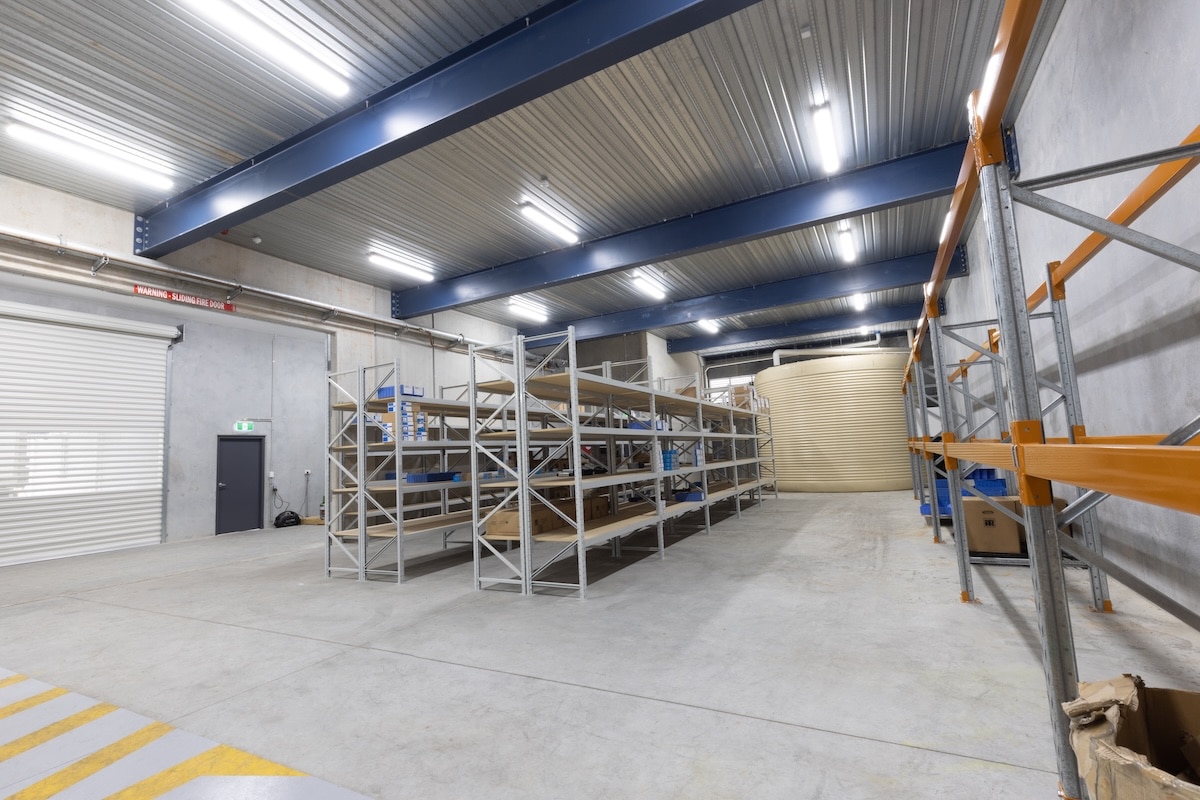
BlueDeck is helping developers and head contractors achieve one of their top priorities on warehouse and distribution centre builds: staying on program.
By Harvey Arkcoll, national sales manager at FTI Group.
Warehouses and distribution centres are projects where the business case is built on speed to operation: every week shaved off construction is a week of earlier revenue, and every week added by slow slab work is a week of cost bleeding into the budget. With e-commerce and logistics demand continuing to drive warehouse and distribution centre construction across Australia, that pressure isn’t easing up anytime soon.
That’s exactly the pressure point FTI Group’s BlueDeck system is designed to relieve.
Before getting into what BlueDeck does differently, it’s worth understanding why long-span slab construction has historically been slow.
Warehouses and distribution centres are defined by their spans. Wide, column-light floor plates are what make racking layouts, forklift movement and dock configurations work efficiently, but the wider the span, the harder the slab has to work structurally. Traditionally, that’s meant heavier temporary propping to support the deck and wet concrete until it cures, more site labour to install and later strike that propping, and a slower overall sequence because trades can’t move freely underneath a propped slab and formwork can’t come down until concrete has gained sufficient strength.
Related stories:
- How builders influence the choice of metal decking
- Composite slabs explained
- A coordinated approach to site productivity
On a large single-storey industrial floor plate, or a multi-level distribution centre with mezzanine or upper-floor slabs, that propping is a structural bottleneck that ripples through the program. Every extra prop is another item to install, inspect and eventually remove. Every extra day of propping is a day trades can’t get underneath to run services, fix ceilings or begin fit-out work.
BlueDeck is an Australian-manufactured, high-tensile steel decking system. It’s primarily used as sacrificial formwork, but it’s also engineered to handle composite action and two-way post-tensioned slabs, so the same system can flex across different structural approaches on the same project. For design teams, that means fewer product switches and fewer coordination headaches between slab types. A single decking specification can carry through a building that mixes ground-floor slabs, mezzanine floors and post-tensioned sections without forcing a rethink at each transition.
That kind of consistency matters more than it might seem on paper. Every time a project switches decking systems between zones, there’s a learning curve for the install crew, a new set of shop drawings and a new set of coordination points with services and steelwork. Standardising on one system that can do multiple jobs removes that friction before it starts.
This is where BlueDeck’s core advantage comes in. Its high-tensile steel construction gives it strong spanning performance, which cuts down on the amount of temporary propping needed and speeds up cycle times on site.
That means the deck itself is doing more of the structural work during the pour, rather than relying on a forest of temporary props underneath. Fewer props means less time spent setting them out, less material handling on site and earlier access underneath the slab for other trades.
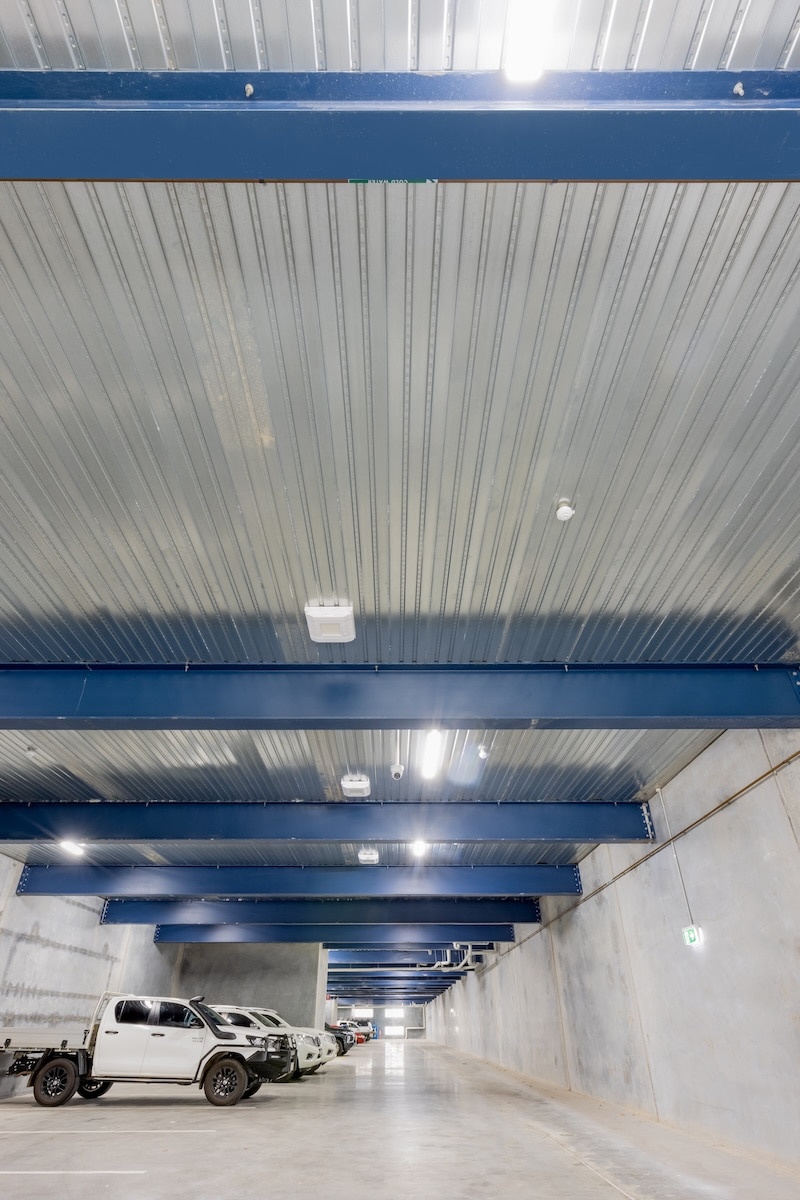
There’s a second lever at play too: sheet length. BlueDeck can be custom-manufactured in lengths of up to 14.3 metres, which means fewer joins across a bay and less time spent on installation while improving structural continuity across the slab. On a standard warehouse bay grid, that can mean the difference between a deck sheet running virtually the full width of a bay versus multiple shorter sheets needing to be lapped, aligned and fixed individually.
Fewer joins means a tidier finish, fewer laps to align, fewer fixing points to check and a faster run from steel delivery to a pour-ready deck. It also reduces the number of potential weak points or leak paths in the deck before the pour, which matters for quality control as much as speed.
Put those two factors together and the effect can show up in a few ways across a large-span program.
Deck installation moves faster across wide bays because less time is spent aligning and fixing sheet joins, and crews can cover more floor area per shift. Trades get underneath sooner because less temporary propping is required, opening up early access for services, fire protection and ceiling works. Rework risk drops, since longer continuous sheets mean fewer joints to check, seal and potentially redo. Sequencing gets more predictable, letting steelwork, services and pours run closer together instead of stalling on formwork strike times. Crane and material handling time is reduced, since fewer, longer sheets mean fewer individual lifts and placements per bay.
Each of these on its own might only save a day here or there. But on a large-span project measured in tens of thousands of square metres, those savings compound across every bay, every level and every trade sequence that depends on the slab being ready.
It’s tempting to frame all of this purely as a time story, but the flow-on effects matter just as much. Fewer props and fewer joins mean fewer variables for site teams to manage, which can translate into more consistent quality control and fewer defects to chase during handover.
For head contractors managing tight defects liability periods and demanding client handover dates, that predictability can be worth as much as the raw time saved.
Because BlueDeck can handle sacrificial formwork, composite slabs and two-way post-tensioned applications, it tends to work best when it’s brought into the structural design conversation early rather than being value-engineered in after the slab design is locked. Structural engineers and builders looking to compress program on a large-span build should be factoring deck spanning capability and sheet length into the bay layout and grid design from the outset, rather than treating decking as a downstream trade decision.
It’s easy to think of decking as a background material – a structural component that receives little attention in program planning. On a large-span warehouse or distribution centre, however, the decking system can either work against the span or work with it.
For more information on BlueDeck, contact FTI Group on 1300 751 701 or visit ftigroup.com.au
The post BlueDeck cuts slab cycle times on large-span builds appeared first on Inside Construction.
View Source


Comments
Post a Comment