
Construcciones Yamaro: Webuild looks beyond the build in Australia
As Webuild pursues its next stage of growth in Australia, it is focused on creating lasting impact beyond project wins.
Across Webuild’s operations in Australia, the focus doesn’t stop at the physical assets delivered, but moves to the social and economic outcomes those projects generate after completion.
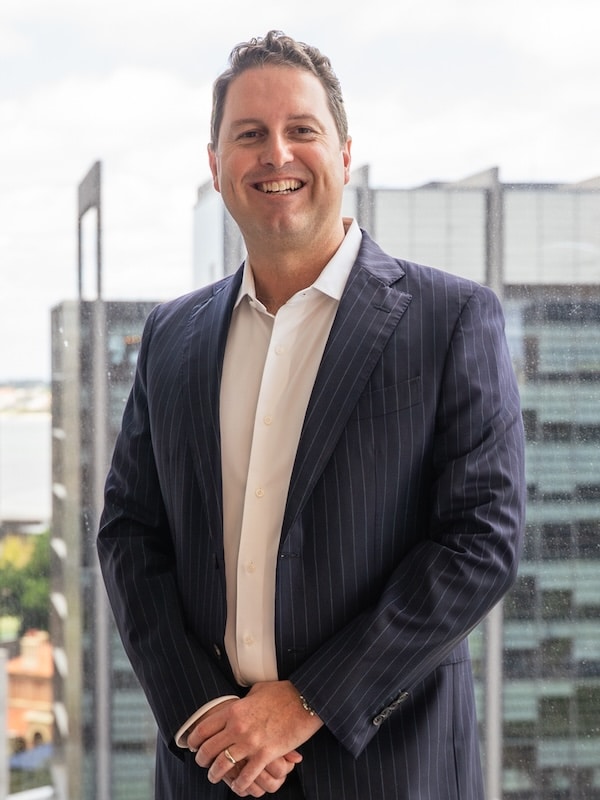
Joel Stringer embodies this mindset. Recently appointed executive vice president of business development, he brings more than 25 years of Tier 1 design and construction experience to support Webuild’s continued growth in Australia and the Asia Pacific region.
Stringer speaks proudly of the ripple effect the infrastructure industry has on the nation.
“Infrastructure is a catalyst for economic activity and social outcomes,” he says. “We have an obligation to ensure that the benefits of our projects flow through to the communities we operate in. That is underpinned by close collaboration and co-creation with clients to deliver their vision.”
This focus on long-term, far-reaching value creation is guiding Webuild’s next phase of growth. Stringer points to a nation-building program now underway, with record infrastructure spend across sports infrastructure, health, transport, water and energy sectors creating a once-in-a-generation opportunity, all unfolding against a complex global backdrop.
Related stories:
- Webuild named in TIME100 Most Influential Companies of 2026 list
- Early-career talent learns on the front line at Webuild
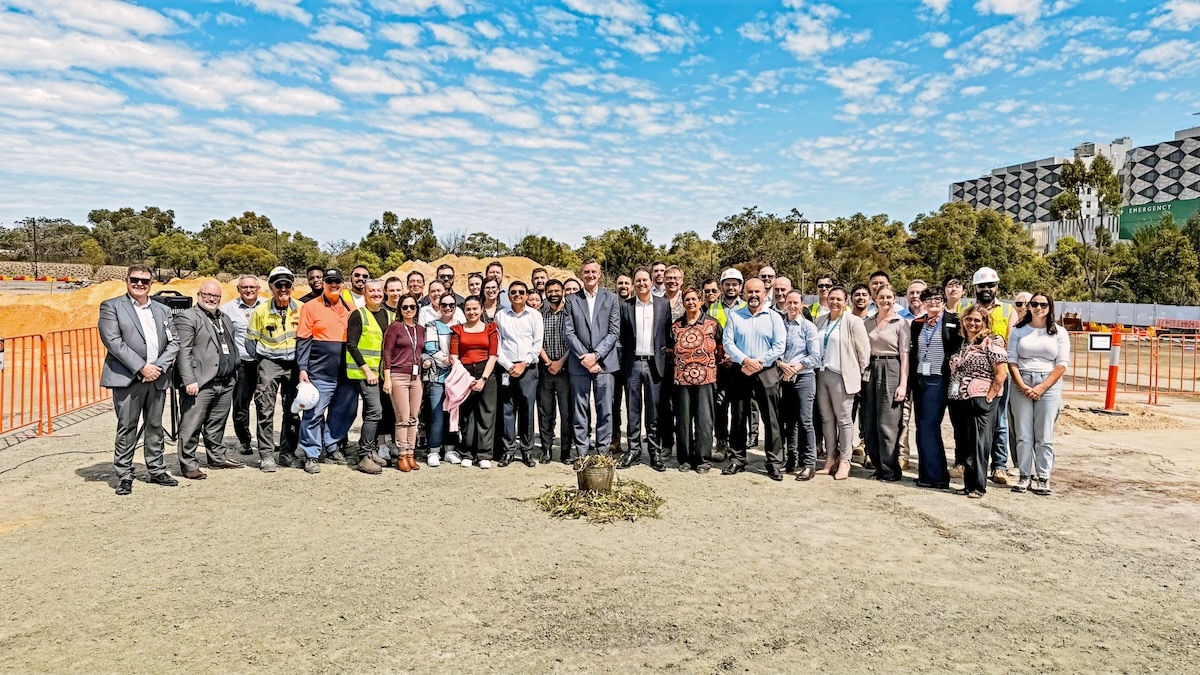
- Construction starts on Osborne Park Hospital expansion
“The international environment remains challenging, with geopolitical tensions and macroeconomic instability creating uncertainty and ongoing volatility across global markets. The full trajectory of these developments remains unclear, with their effects continuing to flow through supply chains, labour markets and regulatory frameworks,” says Stringer.
“The past three years have demonstrated our capacity to manage and adapt to unpredictable risks and rapid change. Webuild has consistently shown resilience, agility and disciplined execution in circumstances that were unprecedented. We continue to deliver increasingly complex projects, sustain operational performance and strengthen our strategic positioning across key markets. The results have exceeded expectations.”
The group’s structure gives it an advantage in this environment. In Australia, Webuild operates as an integrated proposition, bringing together Webuild, Clough and e2o. Webuild’s global infrastructure expertise underpins Clough’s local delivery of engineering and construction works, while e2o provides operations and maintenance capability, supporting the infrastructure, energy and resources markets. Together, this forms a multi-disciplinary model that expands how Webuild responds to clients.
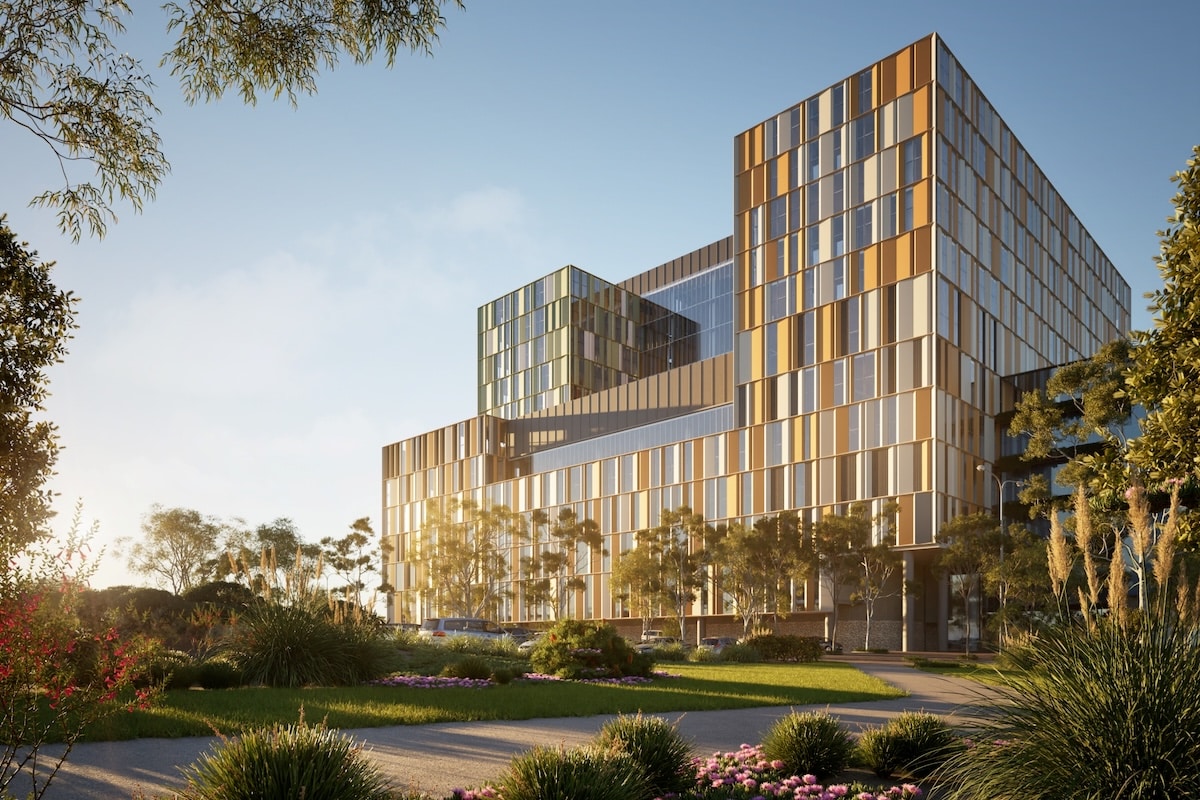
Work spans infrastructure, energy and resources, and more recently, vertical buildings. While vertical buildings are a newer area for Webuild in Australia, its global track record of delivering more than 300 hospitals, stadiums and airports supported the award of the New Women and Babies Hospital Project in Perth. It is no small feat to secure a $1.8 billion Western Australian Government project as its first locally delivered vertical building.
“Since standing up a team of around 150 professionals, we have seen talent attracted to the organisation because of that project, and we are now applying that experience to other pursuits across Australia,” says Stringer. “There are also other health infrastructure opportunities, as well as energy and sports infrastructure-related projects we are looking at.”
But that spread of work is tempered by a measured strategy for bidding and early project engagement. The business maintains focus across three priorities: disciplined origination, with opportunities assessed against core capabilities; a targeted approach to pursuits, aligned to priority geographies, sectors and clients; and a clear understanding of customer expectations, carried through into delivery.
“Fundamentally, clients have a vision to be delivered, and we need to differentiate and deliver on their expectations, ideally beyond. Clients are calling for more competition in the market. It is already a competitive space, so we continue to lift our game to compete and build the Australia of the future,” says Stringer.
“We want to win the right projects and deliver them successfully for our clients. Winning projects is one thing, but execution is what defines you. You are not known for the projects you win, but for how you deliver them.”
To achieve this, Webuild is applying its global expertise in a local context, drawing on modern construction methods and engineering knowledge developed over more than 3,500 complex projects worldwide.
Stringer makes clear that global capability alone doesn’t guarantee success. Effective execution depends on close client collaboration and an understanding of local conditions, stakeholders and customers.
An innovation that works in Italy or the UK will not necessarily succeed in Australia without adjustment. The starting point is not the solution itself, but the problem it is intended to address. From there, global experience can be assessed and refined to suit Australia’s operating environment.
“It is not one-size-fits-all. It is about using global capability and innovation, and tailoring it to the Australian environment,” says Stringer. “Otherwise, it doesn’t resonate. What works in Europe will not always be effective here, so the focus has to be on making it relevant to local conditions.”
But more than anything, Webuild returns to the idea of a ripple effect, which Stringer describes as an obligation.
Beyond delivering physical assets, the group builds long-term national capability through workforce training, skills development and support for a diverse local supply chain.
“We have an obligation to increase capability in the market, lifting talent, apprentices and skills. It is on us as a major multinational, and on all contractors in Australia, to provide training and opportunity,” says Stringer.
“We also need to draw from the broadest and most diverse talent pool possible, including increasing female participation in the construction industry. We are proud to have Clough and e2o recognised as employers committed to gender equality by the Workplace Gender Equality Agency for the fourth consecutive period.
“Mentorship is equally important. I have been fortunate in my career to benefit from strong mentorship, and it is important that we pass that on to the next generation coming through the industry.”
That obligation extends into how the business engages with the communities in which it operates. For Stringer, social licence is not assumed. It needs to be earned and maintained. Trust can be built over time, but it can be eroded quickly if expectations are not met.
There is a broader responsibility in delivery, centred on transparency, early engagement and meaningful collaboration with stakeholders, including First Nations and local communities.
Collaboration underpins how Webuild delivers projects, with a focus on building strong, aligned relationships that deliver shared outcomes. Since joining the group from another large Australian organisation, Stringer says he has not previously experienced this model or the way the group works alongside clients and partners.
“The strength of those relationships means we can add greater value to our clients. It is evident in the way we work with our supply chain, where relationships are built as partnerships with early engagement across clients, designers and delivery teams, rather than transactional arrangements,” he says.
“As projects become more complex, that approach becomes increasingly important. There are more risks in the system, so we need to be more transparent about those risks and how they are shared.”
For all the change and complexity shaping the market, Webuild holds to a set of core fundamentals: safety, quality and a people-first culture built on integrity, capability and teamwork. In Australia, those fundamentals are carried through in how projects are delivered, with early engagement, shared risk and close collaboration across clients, partners, the supply chain and the community.
The next era of infrastructure, Stringer argues, will be built by those who combine collaboration and co-creation with discipline and purpose, contributing to national capability and outcomes beyond the build.
The post Webuild looks beyond the build in Australia appeared first on Inside Construction.
View Source


Comments
Post a Comment