
Construcciones Yamaro: How Visibuild is using AI to help builders see around corners
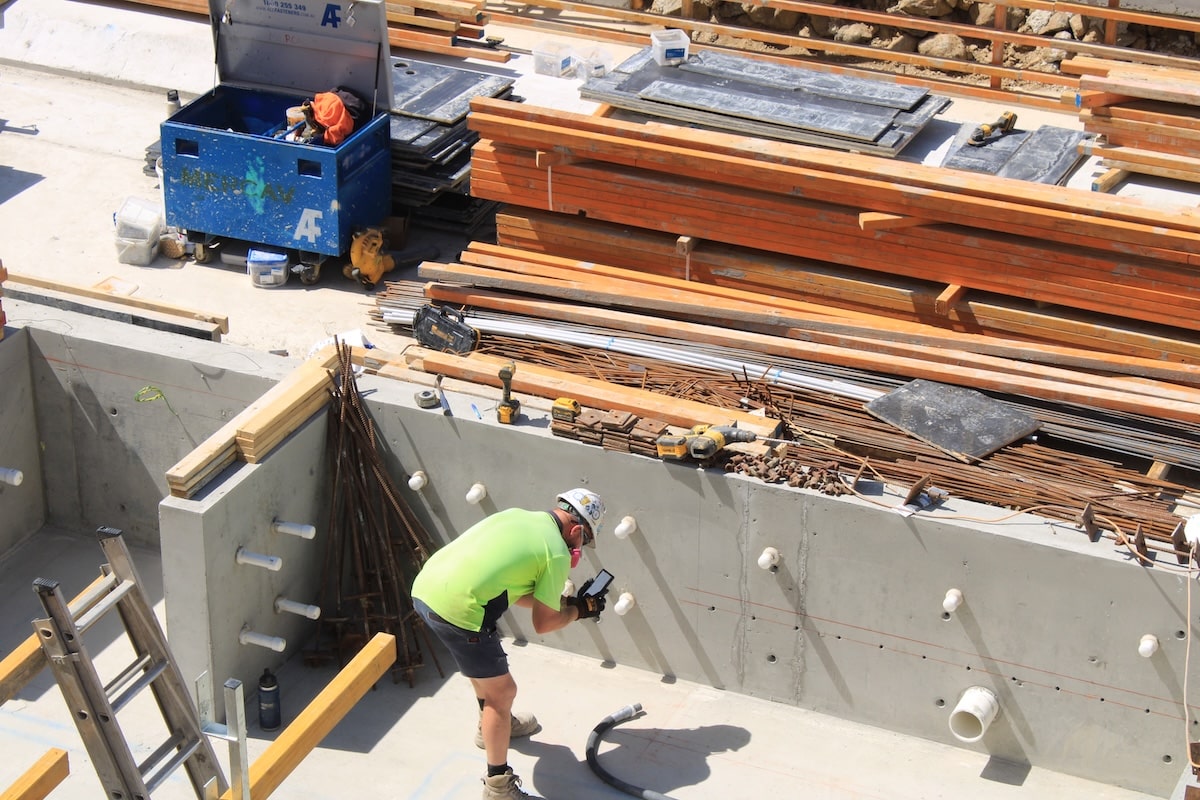
Risk management in construction has traditionally relied on years of accumulated data. Visibuild is using AI to bring that intelligence forward to day one of a project.
Risk management influences cost, program, quality and reputation. It is one of the few levers the industry has to protect margins and improve project outcomes.
Most major issues can be traced back to a risk that was either identified but not carried through or not identified early enough. As Damien Quinn, co-founder and CEO of Visibuild, explains: “Construction risk management is well understood, but it is poorly executed.”
Having spent more than 15 years in the industry before launching Visibuild, a construction management software platform that centres on quality and compliance, Quinn has seen that disconnect play out across projects.
“Every business has extensive lessons learned lists. Teams are good at building detailed risk registers with thousands of line items that identify potential risks on a project,” he says.
“The issue is how that information is used. Once it reaches site, it often relies on what we call ‘individual brilliance’ – someone in the team taking ownership, pulling what is relevant from the risk register and making sure it is managed through the life of the project. In reality, that rarely happens consistently.”
Related stories:
- Closing the loop on construction quality and defect management
- Visibuild connects quality across the construction lifecycle
- Visibuild strengthens the foundations of quality in construction
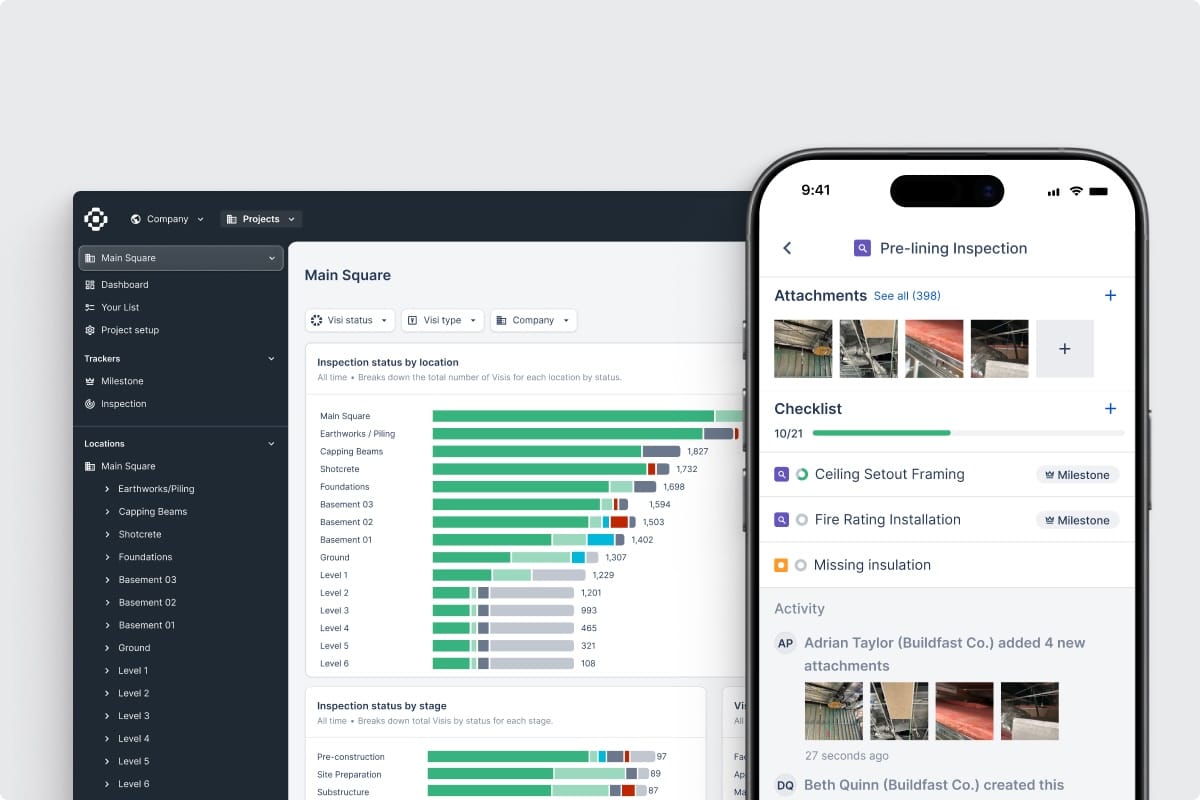
Risk spans every part of a construction project, yet managing it has traditionally relied on people referring back to a register, typically a spreadsheet, that sits outside their day‑to‑day workflow. With so many moving parts, it breaks down quickly.
Without a consistent process, lessons learned sit in that register, often failing to carry through to the next project. Quinn describes this as a trickle-down effect, where information is lost through the layers. Project leaders carry elements of it, passing them through during procurement and package award, but each handover strips away detail. By the time it reaches the workforce on site, the risk can be four or five steps removed from where it was originally identified.
“At that point, people aren’t referring to a register,” says Quinn. “They aren’t even thinking in terms of risk. They are just doing the work the way they did it on the last project. The breakdown isn’t in identifying the risks. It is in making sure they are consistently mitigated. That process falls over somewhere along the chain.”
Quinn puts the cost of unmanaged risk at up to 21 per cent of build value, with around 15 to 18 per cent lost before completion and a further three to five per cent emerging during post-completion rectification, where the same issues often reappear on subsequent projects.
This is, in part, due to the current feedback loop in construction, which Quinn estimates is seven to 10 years. A major project might run for two to five years, but the causes of issues are often not fully understood until years after completion.
“In most cases, the risks that cause those issues were already known at the start of the project,” he says. “The problem is that the industry still relies on learning by being burnt. You don’t need to touch the hot plate every time to know it is going to hurt. There are risks you already understand and should be managing from day one.”
That is the gap Visibuild is targeting with its upcoming AI-powered risk detection system.
“AI in construction is a blank page right now,” says Visibuild co-founder and director Ryan Treweek. “That’s the opportunity: to set the bar before the industry defaults to chatbots and auto-generated paperwork. The hard problem isn’t speed. It’s how you harvest institutional memory and still leave the decision with the professional who’s accountable for it.”
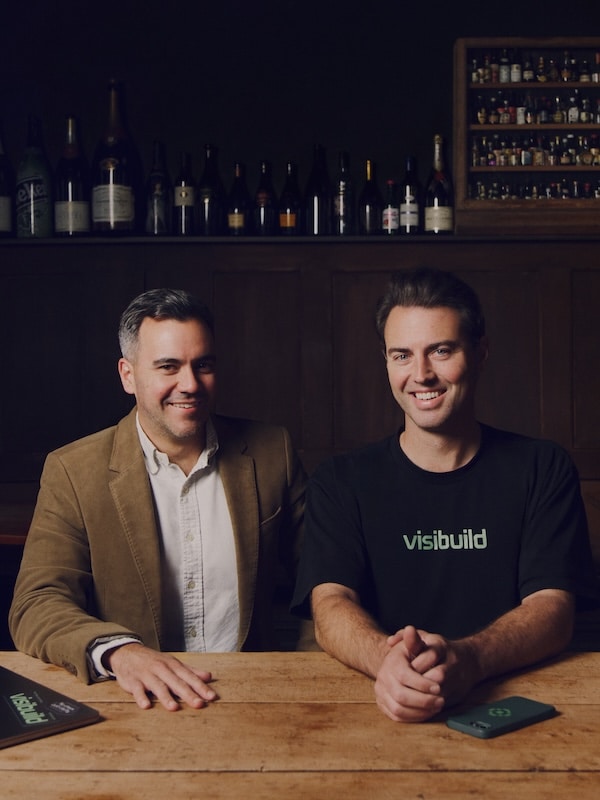
Visibuild’s bet is that the highest-value application of AI in construction isn’t just smarter interfaces. It’s a system that takes what the industry already knows, including the lessons, risk registers and hard-won patterns from past projects, and makes it possible for “the industry to see around corners”.
At project setup, contractors and subcontractors bring templates that define how work is delivered. AI assesses them against the risk register before work begins, identifying gaps ahead of manual review. For teams without a register, Visibuild generates one based on the type of projects they deliver.
Instead of manually comparing templates against thousands of risk items, teams review a pre-checked output. They still apply their own expertise, but now there is a “catch net” in place.
“By the time it reaches site, the worker doesn’t need to think about the register,” says Treweek. “They are following a checklist on their device that has already been aligned to those risks. It tells them what needs to be done to mitigate them.”
During construction, the system monitors inspections and non-conformances in real time, identifying patterns and surfacing risks before isolated issues develop into broader problems.
“It can also connect patterns in defect data. Take something like concrete cracking. You might start to see defects being raised, patching required, and people assume it is just shrinkage cracking and move on,” says Treweek. “AI can step back and look across the project, or even across multiple projects, and recognise that this is a known risk. If several instances are being raised, it can flag that pattern and prompt further investigation.”
Instead of relying on individual judgement, such as whether to involve a structural engineer, the system highlights the risk early, giving the wider team visibility and allowing the right people to step in sooner. Without that, an issue might be patched and forgotten, only to become a larger problem later.
“It isn’t just about tracking individual issues,” says Quinn. “It is about connecting them and ensuring risks are properly assessed before they escalate.”
After handover, defect and ticket data feeds back into the system, refining how future projects are set up and ensuring the same issues are less likely to be repeated.
“That’s how you stop the breakdown,” says Treweek. “The risk doesn’t get lost in the layers; it is embedded in the way the work is delivered.”
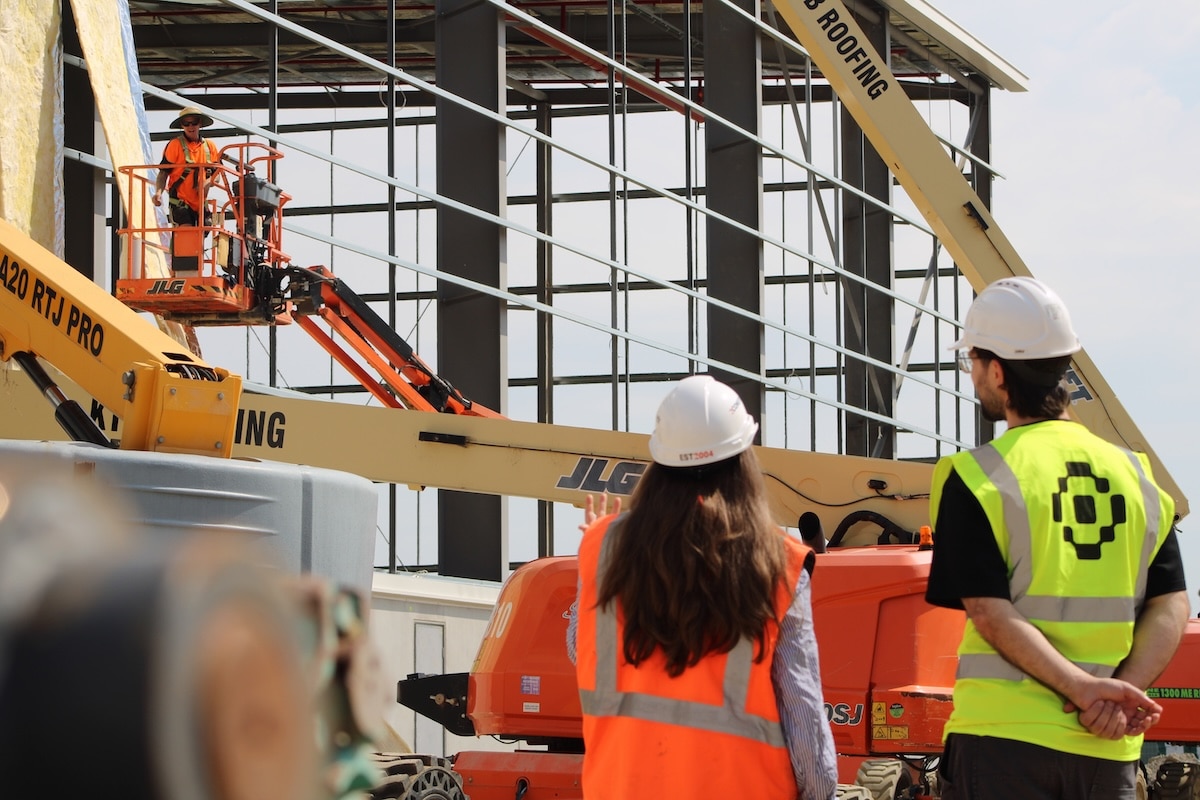
AI doesn’t replace expert judgement; it supports it. Project teams work across multiple trades and review large volumes of information, and can’t realistically hold every risk in view. AI processes that detail and surfaces what matters, allowing engineers and coordinators to apply their judgement more effectively.
Quinn says the real value comes from connecting that intelligence across the full life of a project, rather than allowing it to fragment across stages and teams.
“That’s how you create continuous improvement,” he says. “By bringing together data from inspections, defects, project documentation and warranty management, every phase becomes a source of insight, and all of that feeds back into the risk engine.”
However, making AI-driven risk tools effective depends on clearly defined processes that are consistently applied across projects. That consistency underpins improvement.
“And that means not being afraid to raise issues. There has been a tendency in the construction industry to downplay or overlook them,” says Quinn. “Non-conformances and defects should be raised regularly, because that’s what builds a stronger risk register and lessons learned process. If you aren’t capturing those issues, you are missing the opportunity to improve.”
As pressure on margins continues, managing risk becomes central to project performance. Adding more processes won’t solve the problem. The focus is on making existing systems work harder, with AI applying the information already being generated to shorten the feedback loop and embed lessons learned from the outset.
The post How Visibuild is using AI to help builders see around corners appeared first on Inside Construction.
View Source


Comments
Post a Comment