
Construcciones Yamaro: Coating steel fasteners against corrosion

Corrosion of steel fasteners is inevitable, but with the right coating system, its progression can be effectively controlled.
Steel corrodes through electrochemical reactions in which iron forms oxides in the presence of moisture and oxygen, degrading structural integrity. The rate is dictated by humidity, airborne chlorides, pollutants and exposure conditions. In Australia, coastal environments amplify these factors, with salt-laden air accelerating corrosion. For fasteners, the coating system is the primary line of defence against these conditions.
Most fasteners are steel-based and vulnerable to corrosion, especially in chloride-rich environments. Coatings mitigate this, either forming a barrier that isolates the steel or corroding sacrificially to protect it. At Hobson Engineering, expertise in Australia’s varied exposure conditions drives an expanding range of coatings, each matched to specific needs.
Related stories:
- Behind tilt-panel construction
- Material handling and lifting hardware that performs under load
- Security fasteners safeguarding assets and infrastructure integrity
Coating types and methods
Across Australia’s diverse conditions, from inland areas with minimal risk to coastal zones with intense salt exposure, coating systems are selected to suit the environment.
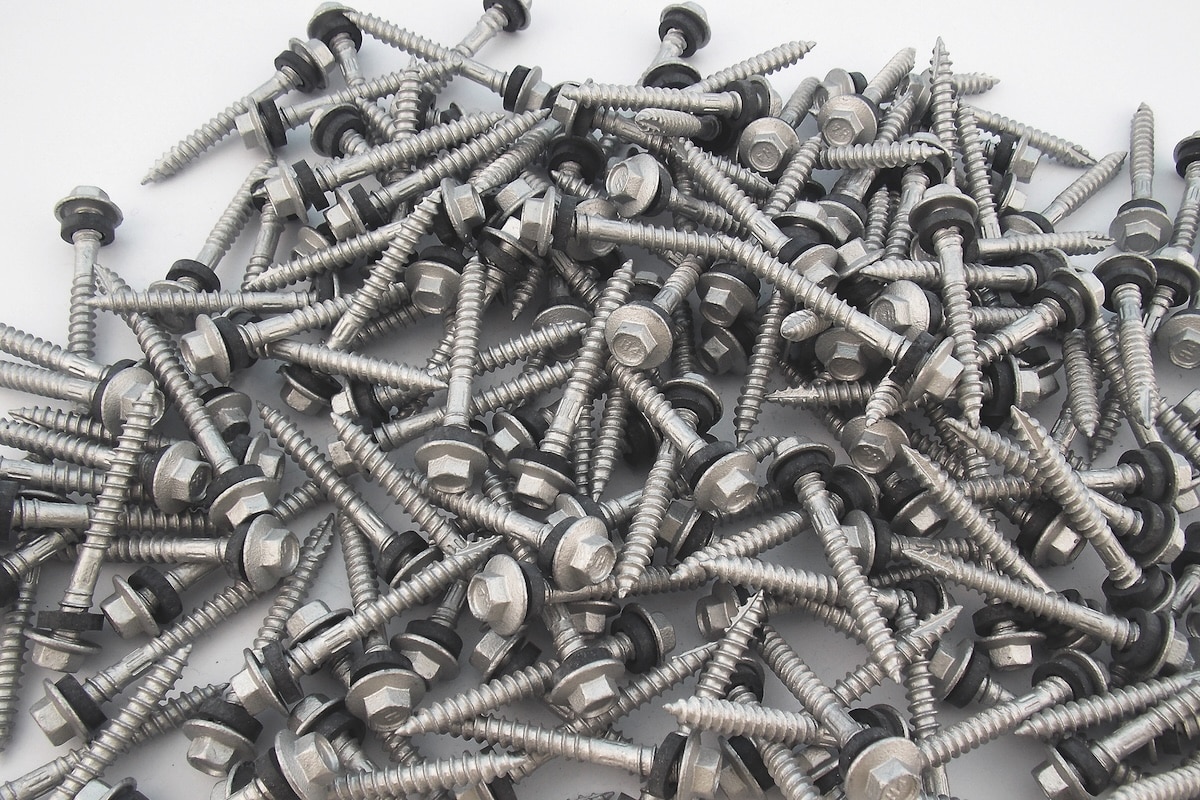
Gavin McPherson, lead engineer at Hobson, explains: “With electroplating, we use an electrical current to deposit a thin layer of metal or an epoxy coating onto the steel. These coatings are typically applied at low thicknesses, often just a few microns.
“We can also mechanically galvanise, where zinc powder is applied with another medium to effectively bond it onto the steel surface, or hot-dip galvanise, which involves dipping the fastener into a bath of molten zinc.
“Then there are more traditional paint-type coatings, such as zinc flake or Ruspert. In those cases, we dip the fastener into a liquid coating and then spin off the excess. It is a dip-spin process, which leaves a consistent finish on the fastener.”
Each process dictates the coating’s properties, making careful selection essential for the fastener’s intended environment.
Understanding corrosion categories
Specifying the correct coating begins with assessing both the macroclimate (broad regional environments) and microclimate (localised, structure-specific environments). ISO 9223 outlines macroclimate corrosion categories, ranging from low (C1) to high (C5) and extreme (CX).
At the lower end of the scale, C1 environments present negligible corrosion risk, typically in heated indoor spaces or enclosed commercial interiors, where thin electroplated coatings are sufficient. C2 extends to low-pollution, predominantly inland or rural conditions, where corrosion remains limited but no longer negligible.
The shift to C3 introduces sustained exposure to pollutants and moisture, characteristic of suburban and inner-city environments, where coatings such as mechanical galvanising are commonly adopted to provide increased durability. Beyond this point, proximity to the coastline becomes the dominant factor.
“C4 typically applies to areas around 0.5 to five kilometres from the coastline, where hot-dip galvanising coatings are suitable. This is where we have introduced fasteners with high-performance coatings,” explains McPherson.
“C5 is more severe, generally around 50 to 500 metres from the coast, while CX is the most extreme category, typically within about 50 metres, where salt exposure is highest.”
For C5 and CX environments, where exposure is sustained and aggressive, Hobson typically recommends stainless-steel fasteners, such as BUMAX high-strength bolts and Bi-FiX screws.
“Stainless steels protect themselves by forming a passive oxide layer,” says McPherson. “That makes them more tolerant of damage. If a stainless-steel fastener is scratched, it can self-repair, whereas a damaged applied coating can expose the underlying steel and increase the risk of corrosion.”
But the macroclimate is only part of the picture. Microclimate is just as important. This includes factors such as whether the fastener is exposed to rainfall, which can reduce salt build-up, or sheltered, such as under an eave or behind cladding.
“In a coastal environment, a fastener may be exposed to salt, but without rain to wash it away, corrosion can be more aggressive than in areas cleaned by rainfall,” says McPherson.
Alternatively, a building might sit in a higher corrosion category, but if the fastener is protected behind a screen, the effective exposure may be lower. In that case, a lower coating category may be suitable.
“Engineers should also consider the application itself,” says McPherson. “In many cases, dissimilar metals are used together and require isolating washers to prevent galvanic corrosion. Specific performance requirements determine the most suitable coating for these fasteners to ensure their effectiveness.”
Access is another factor. Engineers can specify a high-protection coating and expect it to last 50 to 100 years without maintenance, or they can use a mid-level coating with the expectation that it will need to be reapplied after about 20 years.
“If a structure is in a remote or difficult-to-access location, that becomes a key consideration,” says McPherson. “In those cases, we need a high-performance coating to avoid costly maintenance in the future. Alternatively, BUMAX high-strength stainless-steel fasteners are ideal, requiring little to no maintenance.”
The balancing act
With coating systems and corrosion categories understood, the challenge becomes one of specification, balancing environmental exposure with performance requirements.
The first step is accurate classification of the corrosion environment, taking into account both the macroclimate and the microclimate. Misjudging either can result in a coating that underperforms in service or one that exceeds what is required for the application.
This is followed by defining performance expectations aligned to design life. There is little value in specifying a high-end stainless-steel fastener if the structure only needs to last 10 years. Instead, the selection should reflect the intended service life, maintenance strategy and overall project requirements.
Cost must also be considered, but always in the context of lifecycle performance. A lower cost coating may appear attractive upfront, but if it requires earlier replacement or ongoing maintenance, the long-term cost can outweigh the initial saving. Conversely, over-specifying can introduce unnecessary expense without delivering practical benefit.
“There needs to be a balance between performance and cost to determine the most suitable fastener for the application. That means clearly defining expected service life and required performance,” says McPherson.
Expanding to meet new challenges
McPherson says market demand, alongside the push to reduce emissions in manufacturing processes, has driven Hobson to expand its coatings range.
“There is a push, particularly in Europe, to move away from hot-dip galvanising. It is energy intensive and not seen as environmentally friendly, given the use of molten zinc and the associated emissions,” he says.
“As a result, there is a shift towards a new generation of coatings. X9 ProteXion is playing a big part in that, and we are seeing greater acceptance of stainless-steel fasteners as well.
“If we look back 20 years, stainless was considered a premium option and only used where absolutely necessary. Now, we are seeing organisations such as water authorities, which traditionally specified hot-dip galvanised finishes, moving towards high-grade stainless-steel fasteners for infrastructure applications.”
Hobson’s coatings range reflects this progression, spanning from basic protective finishes to systems suited to sustained exposure in aggressive environments.
By aligning coating systems with Australia’s diverse exposure conditions, Hobson ensures fasteners achieve the required performance across their intended service life.
The post Coating steel fasteners against corrosion appeared first on Inside Construction.
View Source


Comments
Post a Comment